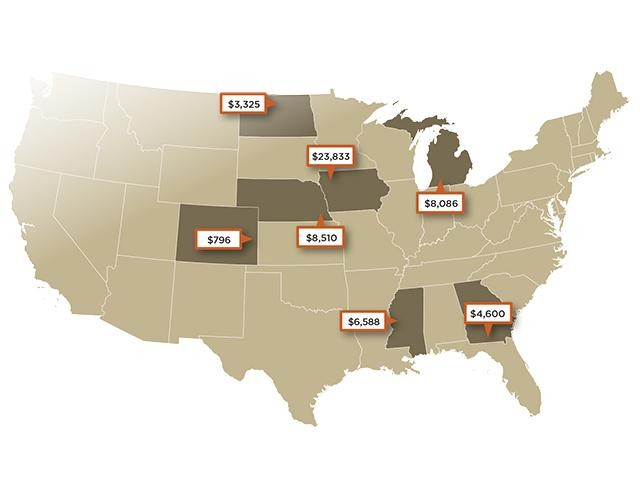
June’s National Dairy Month arrives at a moment when several of our Midwest states are seeing major momentum in dairy processing investment. As processors look beyond traditional strongholds, states with growing milk supplies — including Iowa, Minnesota, South Dakota, Wisconsin, and Michigan — are emerging as strategic hubs for future capacity.
The article highlights Iowa’s return to the nation’s top 10 dairy states, driven by herd growth along the I‑29 corridor spanning western Iowa, southwestern Minnesota, and eastern South Dakota. Wisconsin continues to draw significant investment, with more than $1.1 billion tied to its long‑standing leadership in cheese and whey production. Michigan also stands out, attracting $1.3 billion in new processing capacity as it leads the nation in milk per cow productivity.
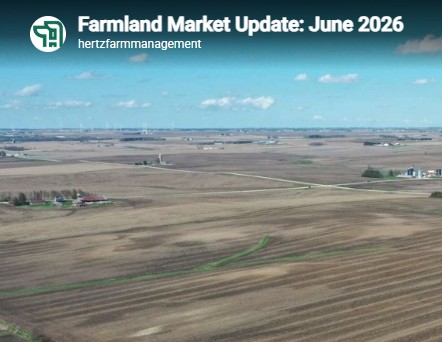
Hertz Real Estate Services’ June 2026 Farmland Market Update highlights a land market that remains steady across the Corn Belt, even as producers navigate tighter margins and shifting interest‑rate expectations. Hear from their President, Doug Hensley, shares the latest on farmland values, current market conditions, and key factors influencing the land market – Hertz Farmland Market Update Videos
Across the Midwest, Land Sales Bulletin’s finalized land sale data reflects the same trend: resilient pricing for top‑tier cropland across our Corn Belt states. While softer commodity prices and elevated input costs are creating pressure, neither has meaningfully disrupted the market’s underlying strength.
As both a trusted customer and a leading voice in the farmland industry, proud to share Hertz’s latest update. Make sure to sign up to have their Farmland Market Updates land in your inbox: https://www.hertz.ag/subscribe
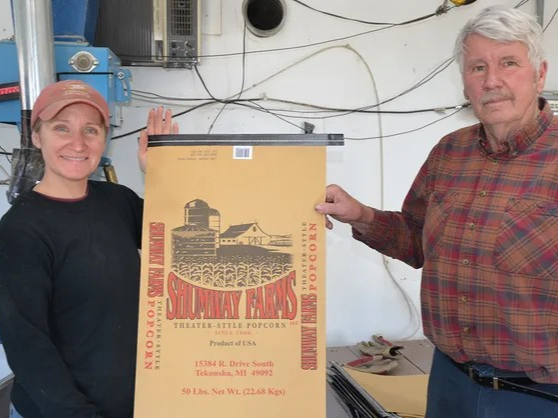
Michigan and it’s farmland remains one of Land Sales Bulletin’s most dynamic Midwest reporting states — a region where long‑established family farms continue to evolve, diversify, and find new markets. A recent example comes from Tekonsha, where sixth‑generation farmer Ed Shumway transformed his family’s 170‑year‑old dairy farm into a thriving international popcorn operation, shipping premium kernels to 28 countries.
Shumway’s shift from dairy to specialty crops began in the early 1990s, when he pivoted to popcorn production after years of managing a traditional dairy herd. Today, he farms roughly 700 acres, rotating popcorn and soybeans for fertility and pest management benefits. His operation extends beyond his own acres, contracting with growers in Michigan and Ohio to bring total popcorn acreage to 2,000 acres annually.
Michigan’s specialty crop strength is on full display in stories like this. From precision harvest practices — where even a cracked hull can reduce popping quality — to investments in advanced drying and cleaning systems that ensure premium kernels reach global buyers, Michigan producers continue to demonstrate the innovation and adaptability that define the state’s agricultural landscape.
Shumway Popcorn’s international reach includes markets in Jordan, Lebanon, Chile, Germany, Mexico, and Indonesia, supported by Michigan’s strong export infrastructure and state‑level resources for agricultural trade. It’s a reminder that Michigan farmland doesn’t just feed local communities — it connects to global supply chains. Farm Progress:Michigan farmer pivot to popcorn goes global
Land Sales Bulletin tracks verified farmland sales across Michigan and the broader Midwest, providing transparent, comparable data that helps landowners, operators, and ag professionals understand the trends shaping regions like this one.
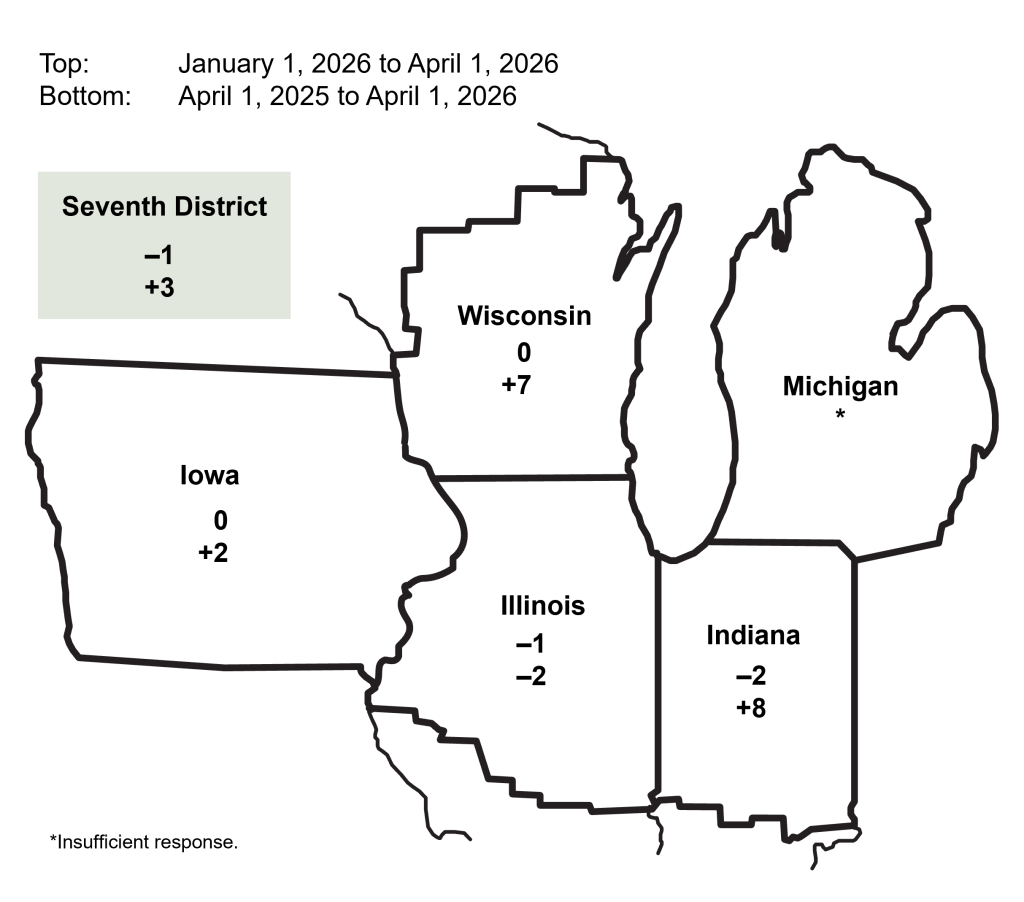
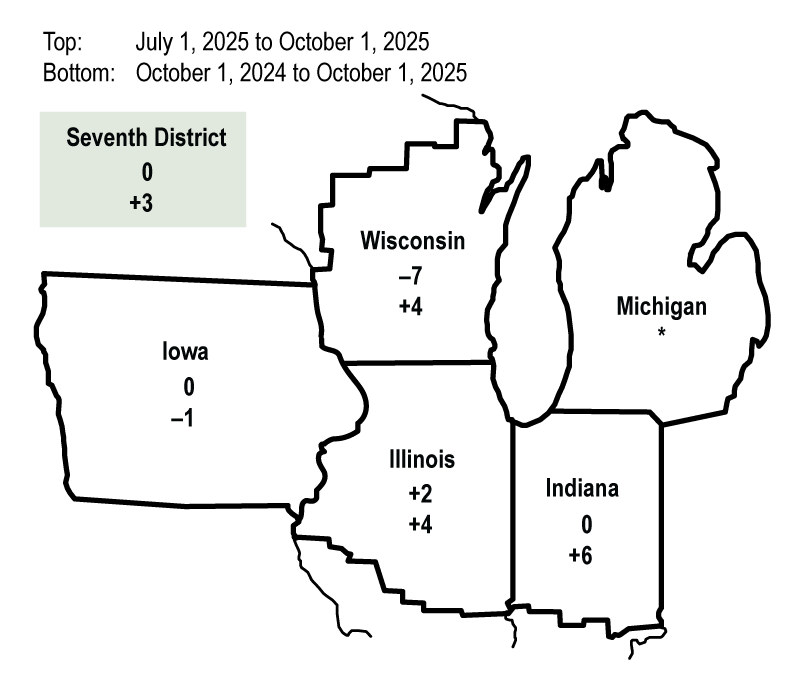
The Chicago Federal Reserve’s latest AgLetter shows that Midwest farmland values continue to demonstrate steady resilience heading into 2026. According to Seventh District data, agricultural land values were up 3% from a year earlier in the first quarter, even as “good” farmland saw a slight 1% dip from Q4 2025.
Surveyed lenders reported lower demand for farmland purchases compared with the same period last year, and the amount of farmland for sale also declined heading into early spring. Acreage sold followed the same trend, with fewer farms and fewer acres changing hands year over year.
Cash rents softened across much of the region, with the District seeing a 3% decrease in 2026—the second consecutive annual decline. State‑level shifts varied: rents were up 2% in Indiana, but down in Illinois, Iowa, and Wisconsin.
Credit conditions weakened as well. Lenders reported lower repayment rates, higher renewals and extensions, and continued strong demand for operating loans—now up for the tenth straight quarter. Nearly 17% of borrowers carried more debt into 2026 than the prior year. Read more: https://www.chicagofed.org/publications/agletter/2025-2029/may-2026
For Land Sales Bulletin’s Midwest reporting region—Illinois, Indiana, Iowa, Michigan, Minnesota, Nebraska, North Dakota, Ohio, South Dakota, and Wisconsin—these findings reinforce what our weekly finalized sales continue to show: a market adjusting to tighter credit and softer rent structures, yet still anchored by long‑term demand and the enduring strength of Midwest agriculture.
Across the Midwest, farmland is more than acreage—it is heritage, livelihood, and the foundation of rural communities. Yet despite its importance, reliable information about what land actually sells for can be surprisingly difficult to find. That’s where Land Sales Bulletin plays a vital role.
For more than three decades, Land Sales Bulletin (LSB) has served as one of the Midwest’s most trusted sources for rural land sales. In a region where agriculture shapes local economies, family legacies, and community identity, LSB provides something essential: accurate, timely, recorded county‑level land sale data. Our data provides a clear, factual picture of the land market—free from speculation, rumor, or inflated auction chatter.
What Land Sales Bulletin Does
LSB focuses exclusively on recorded land sales of 20 acres or more, across 10 core Midwest states: Illinois, Iowa, Indiana, Michigan, Minnesota, Nebraska, North Dakota, Ohio, South Dakota, and Wisconsin, pulled directly from county courthouse records. This means:
No pending sales
No auction estimates
No unverifiable numbers
Just finalized, documented transactions that reflect real market activity.
Each sale includes county‑level detail—acres, price, land type, soil ratings, PINS, and buyer/seller information when available—giving farmers, landowners, brokers, lenders, appraisers, investors, and rural communities the transparency they need to make informed decisions.
Why This Matters to the Public
Even for residents who are not involved in agriculture, land sales influence daily life:
Local businesses depend on strong farm income.
Schools and infrastructure rely on stable property valuations.
Community planning requires understanding how land use is changing.
Economic development hinges on the health of rural land markets.
Accurate land‑sale reporting puts boots on the ground and helps ensure fairness, transparency, and informed decision‑making across the region.
The Human Story Behind Every Sale
Every land sale represents a turning point:
A retiring farmer passing land to the next generation
A young operator expanding to stay competitive
A family settling an estate
A community adjusting to new ownership
LSB’s role is to document these transitions with accuracy, timeliness and regard. By preserving the facts, LSB helps ensure that decisions—large and small—are grounded in facts.
Midwest Land Use: What the Data Shows
LSB’s 10 Midwest states remain among the most agriculturally productive in the nation. According to the 2022 USDA Census of Agriculture:
Iowa leads the region with nearly 30 million acres of farmland.
Nebraska, Illinois, Minnesota, and South Dakota each maintain more than 20 million acres.
North Dakota remains heavily agricultural, dominated by row crops and small grains.
Michigan and Ohio have smaller totals but maintain diverse production bases.
Wisconsin continues to balance dairy, forage, and specialty crops.
Across the region, one trend is clear: fewer farms, larger operations, and continued consolidation. Iowa was the only state in the group to gain farms between 2017 and 2022; all others saw declines.
When combined, LSB states contain roughly 260 million acres of farmland—representing nearly 30% of all U.S. farmland. That concentration underscores the Midwest’s role as the core of U.S. food, feed, and fuel production.
How Land Sales Bulletin Supports the Region
LSB’s subscriptions provide:
Completed, documented land sales of 20+ acres
State and county‑level detail on actual recorded sale transactions
Historical back data for market trend analysis
Reliable benchmarks for appraisals, lending, and estate planning
Consistent reporting across 10 states that anchor American agriculture
Because nearly one‑third of U.S. farmland lies within these states, LSB’s reporting helps shape national understanding of land values and market trends.
What Sets Us Apart
Our strength lies in our hands-on analysis of land sales data by local Midwest-trained land sales data specialists. This expertise ensures every documented land sale transaction is carefully reviewed and contextualized, providing unparalleled insight into the true market dynamics of the region. Our specialists bring knowledge and experience, making our data not just accurate, but actionable for farmers, landowners, realtors, lenders, investors, and appraisers alike.
Additionally, Land Sales Bulletin distinguishes itself through its commitment to transparency and consistency. We source data exclusively from official county courthouse records, ensuring that every sale reported is a complete, documented transaction. This rigorous approach eliminates speculation and provides stakeholders with trustworthy, timely information. Our ongoing dedication to quality makes us the Midwest’s most reliable land sales resource and choice for rural land sales data.
A Clearer Future for Midwest Land Markets
With rising farmland values, increasing investor participation, and ongoing consolidation, the need for transparent and documented land sale information has never been greater. Land Sales Bulletin is committed to delivering the clarity, consistency, and integrity Midwest rural real estate professionals rely on—supporting informed decisions and honoring the land and communities we serve.
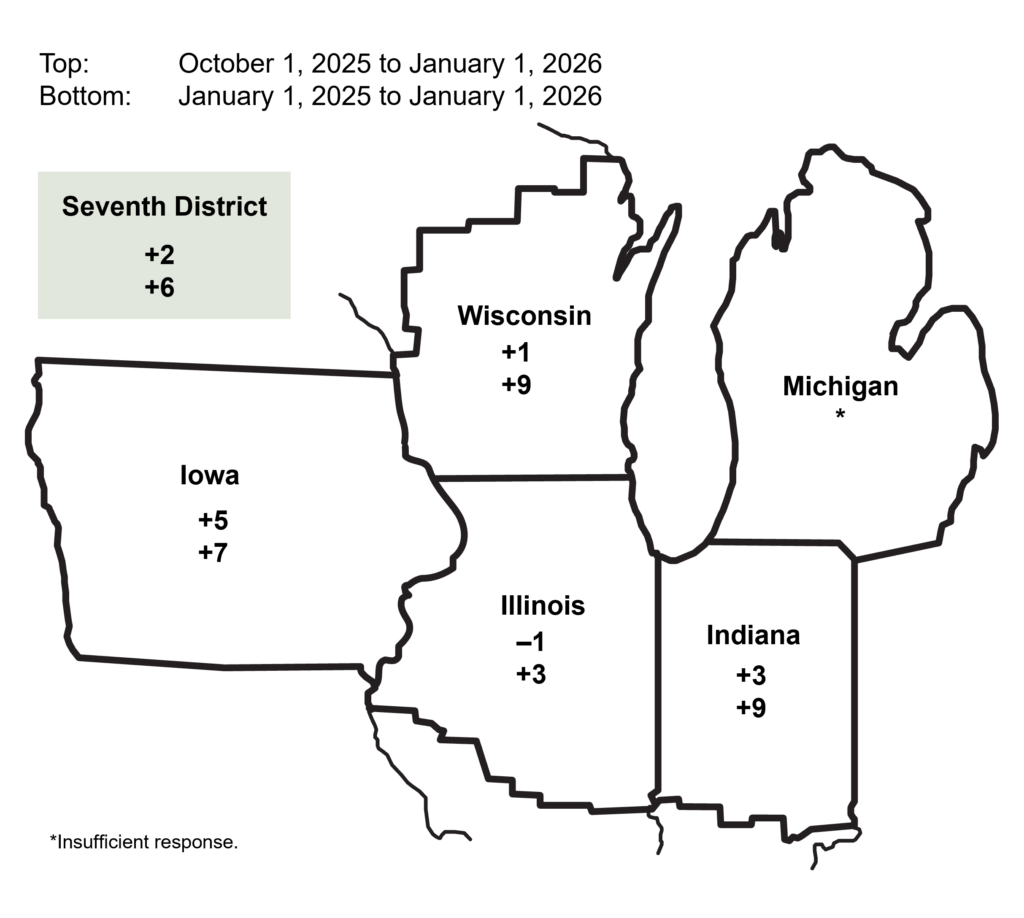
Federal Reserve Bank of Chicago AgLetter No. 2011, February 2026 – Our Midwest reporting states farmland values ended 2025 on solid footing.
• +6% annual increase across the Seventh District • Q4 values up 2% • IL, IN, IA, WI all posted single‑digit gains • Credit conditions tightened, but interest rates eased
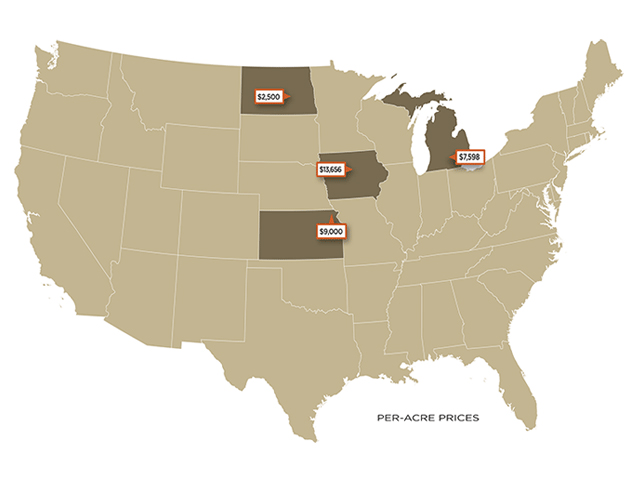
Progressive Farmer’s recent Landwatch Weekly report features farmland sales from Kansas, and our Midwest reporting states of Iowa, Michigan, and North Dakota. Find details, as well as key contacts for each highlighted sale – Recent Farmland Sales in Iowa, Kansas, Michigan, North Dakota
Midwest farmland for our reporting states of Illinois, Indiana, Michigan and Wisconsin continues to prove its resilience, with values climbing 3% over the past year. Yet, beneath the optimism lies a tightening credit environment that could reshape the landscape for buyers and investors. While some states are seeing stronger gains than others, the overall trend underscores farmland’s enduring role as a cornerstone of Midwest wealth and investment. Read more from American Farmland Owner – Land Values Report Shows Increase for Key Midwest States