Wisconsin Farmland Values in 2026: Stability Driven by Supply, Equity, and Local Demand

accountJennifer Moran | calendar-monthMay 21, 2026

Our Midwest reporting state of Wisconsin farmland values in 2026 remain remarkably steady, even after several years of rapid appreciation. Peoples Company’s recent analysis shows the market has shifted into a phase that is stable, disciplined, and highly localized.

Despite expectations of a correction due to higher interest rates and tighter margins, values across much of the state have held firm. The key stabilizers: limited supply, strong owner equity, and continued demand for high‑quality parcels.

Inventory remains the defining force. Generational ownership patterns and strong financial positions have kept many high‑quality tillable acres off the open market, reducing transaction volume across Wisconsin’s agricultural counties. When productive, well‑located parcels do list, competition is intense — especially among local operators seeking strategic expansion opportunities.

Interest rates have influenced buyer behavior but have not weakened values. Well‑capitalized buyers remain active, relying less on leverage and focusing more on operational fit and long‑term efficiency.

Quality differentiation is widening. Soil productivity, access, drainage, field configuration, and proximity to existing operations are now major determinants of value potential, with top‑tier parcels commanding clear premiums. Read more: Wisconsin Farmland Values in 2026: What’s Driving the Market

For Wisconsin landowners, 2026 remains a historically favorable environment — but outcomes increasingly depend on location, accurate pricing, and hyper‑local market knowledge. As Land Sales Bulletin continues to report verified sales across the Midwest, Wisconsin stands out as a market driven by fundamentals rather than speculation.

Midwest Farmland Values Hold Firm as 2026 Begins: Insights from the Chicago Fed’s Q1 AgLetter

accountJennifer Moran | calendar-monthMay 15, 2026

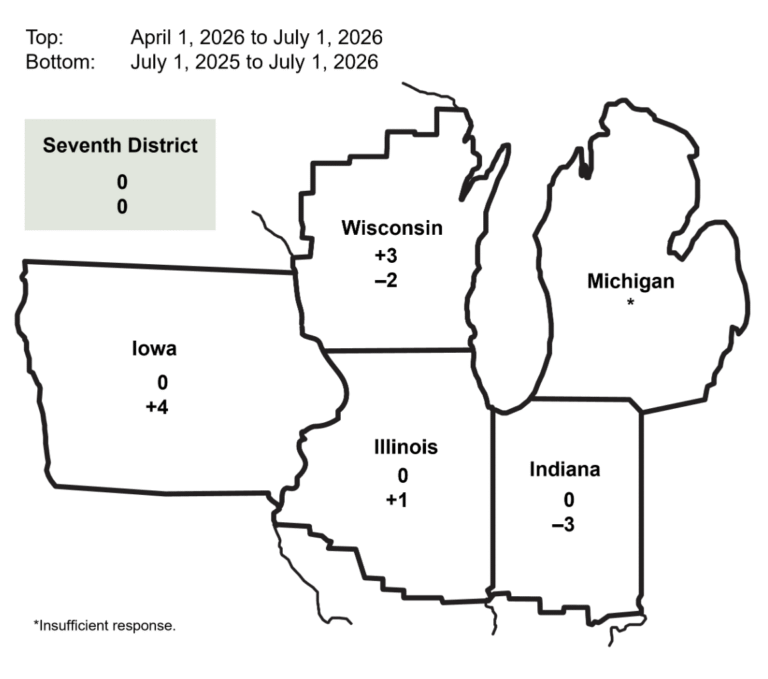
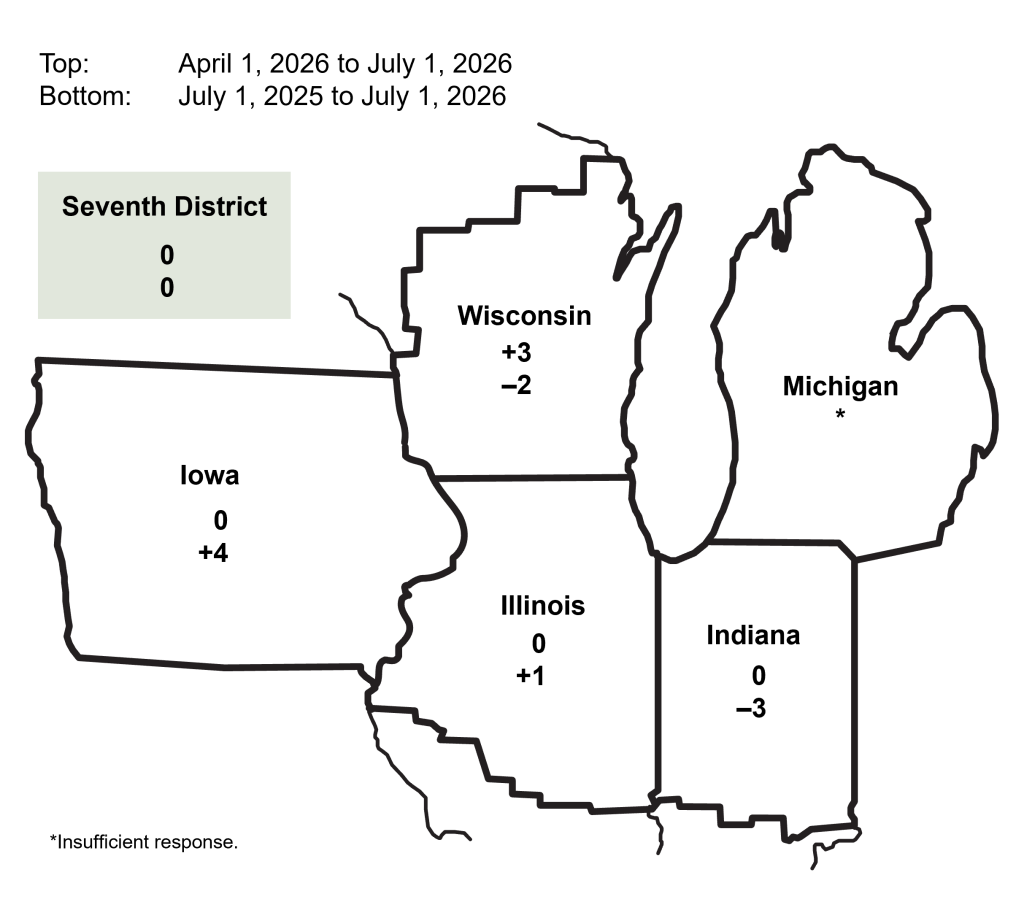
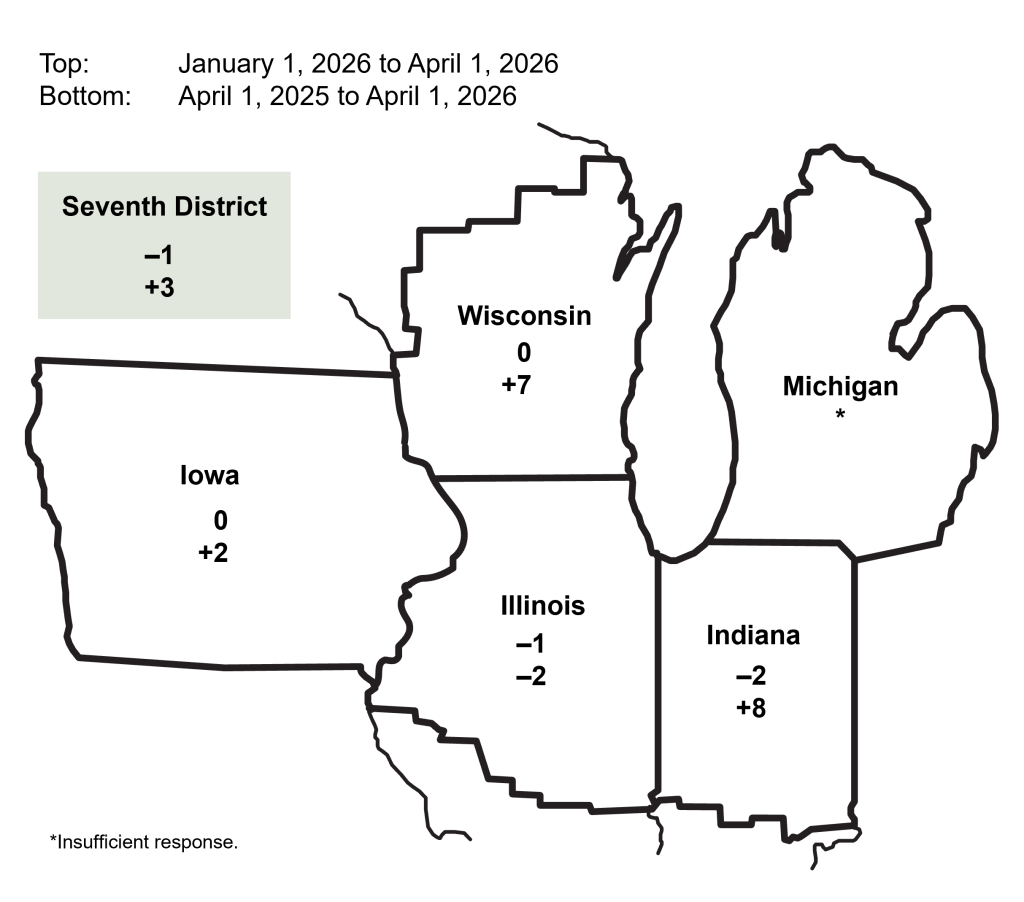
The Chicago Federal Reserve’s latest AgLetter shows that Midwest farmland values continue to demonstrate steady resilience heading into 2026. According to Seventh District data, agricultural land values were up 3% from a year earlier in the first quarter, even as “good” farmland saw a slight 1% dip from Q4 2025.

Surveyed lenders reported lower demand for farmland purchases compared with the same period last year, and the amount of farmland for sale also declined heading into early spring. Acreage sold followed the same trend, with fewer farms and fewer acres changing hands year over year.

Cash rents softened across much of the region, with the District seeing a 3% decrease in 2026—the second consecutive annual decline. State‑level shifts varied: rents were up 2% in Indiana, but down in Illinois, Iowa, and Wisconsin.

Credit conditions weakened as well. Lenders reported lower repayment rates, higher renewals and extensions, and continued strong demand for operating loans—now up for the tenth straight quarter. Nearly 17% of borrowers carried more debt into 2026 than the prior year. Read more: https://www.chicagofed.org/publications/agletter/2025-2029/may-2026

For Land Sales Bulletin’s Midwest reporting region—Illinois, Indiana, Iowa, Michigan, Minnesota, Nebraska, North Dakota, Ohio, South Dakota, and Wisconsin—these findings reinforce what our weekly finalized sales continue to show: a market adjusting to tighter credit and softer rent structures, yet still anchored by long‑term demand and the enduring strength of Midwest agriculture.

Farmland Values Hold Firm Across the Midwest Despite Weaker Farm Finances

accountJennifer Moran | calendar-monthMarch 26, 2026

American Farmland Owner reports on the New Federal Reserve surveys that show farmland values across the Midwest held steady or increased in 2025, reinforcing the strength of the region’s land market even as farm finances weakened.

For those following Land Sales Bulletin’s 10-state Midwest region—Illinois, Indiana, Iowa, Michigan, Minnesota, Nebraska, North Dakota, Ohio, South Dakota, and Wisconsin—the data highlights continued stability:

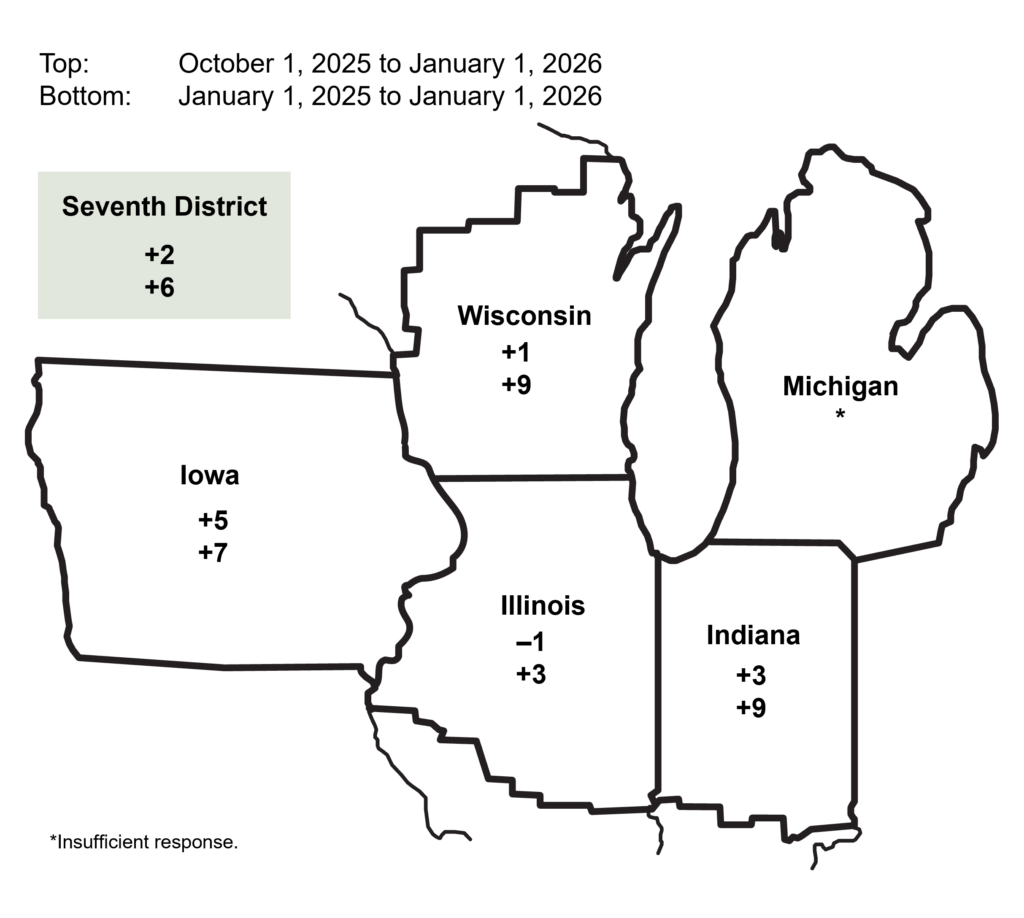
  • Chicago Fed District: Farmland values up 6% year over year
    • Indiana +9%
    • Wisconsin +9%
    • Iowa +7%
    • Illinois +3%
  • Kansas City Fed District:
    • Non‑irrigated land: –0.3%
    • Irrigated land: +1.2%
    • Ranchland: +4.1%

At the same time, repayment challenges increased, more banks tightened credit standards, and interest rates—while easing—remain above long‑term averages.

Even with these pressures, Midwest farmland continues to stand out as one of the most stable assets in the agricultural economy. Read more: americanfarmlandowner.com

Midwest Farmland Values – “The Selective Strength” Era

accountJennifer Moran | calendar-monthMarch 24, 2026

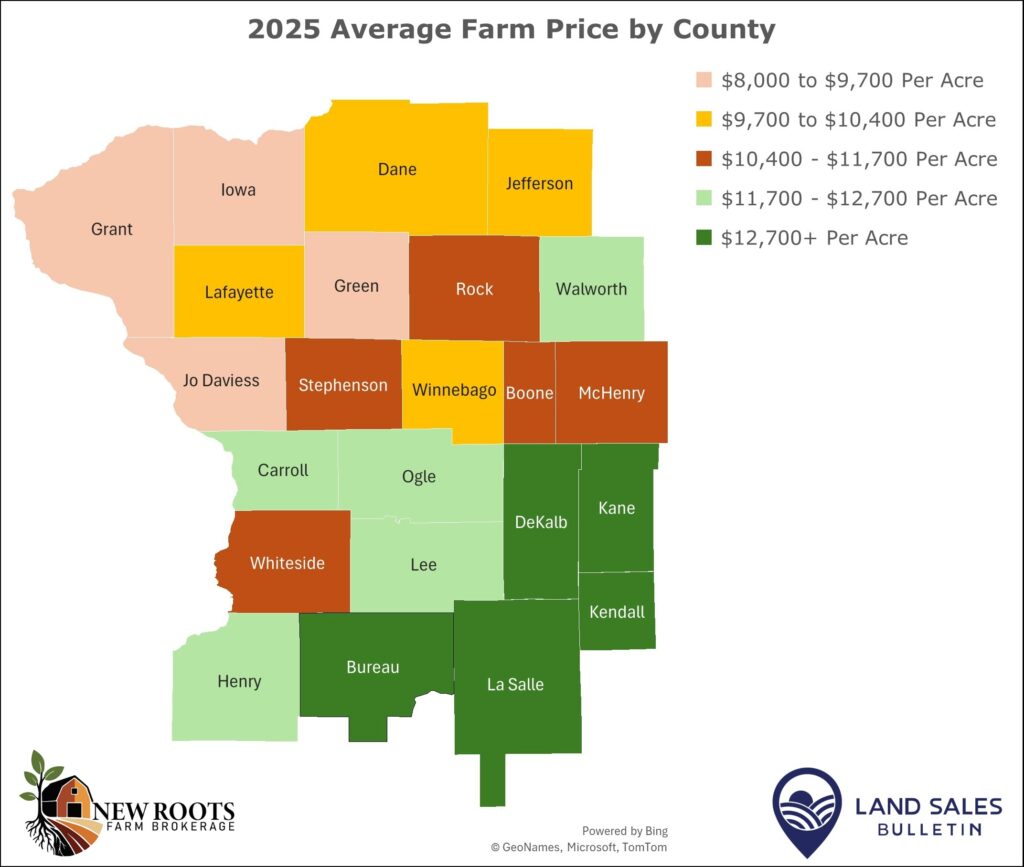
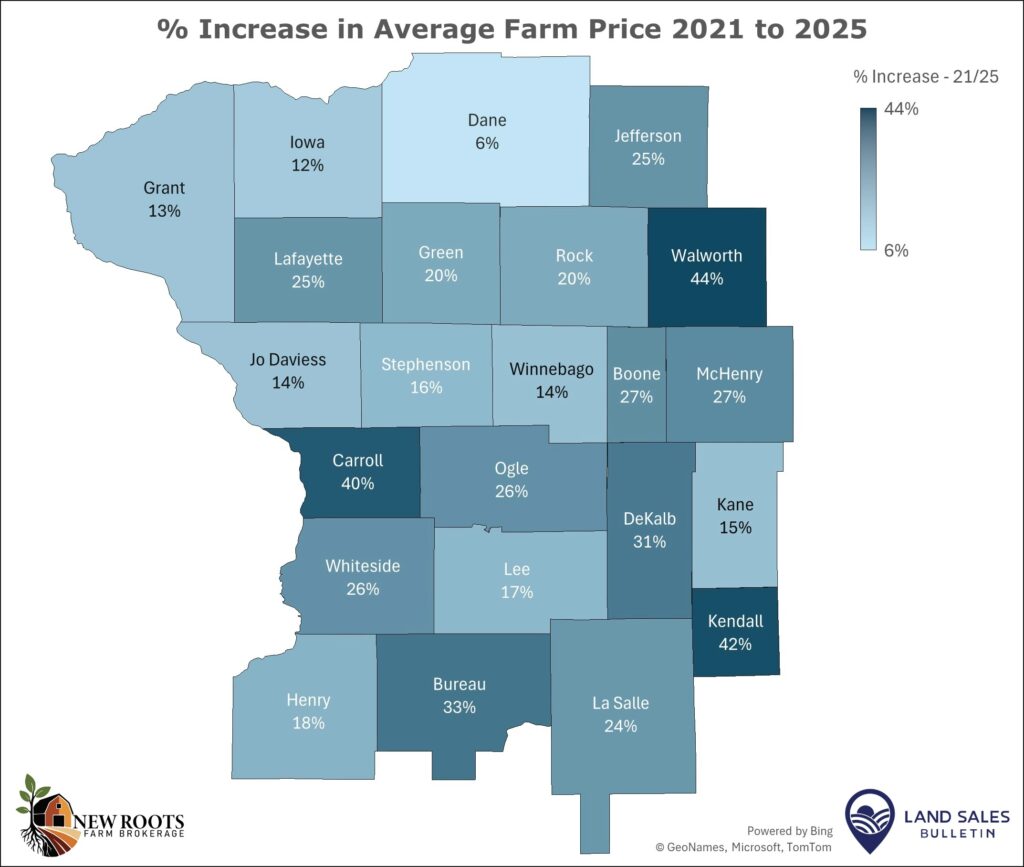
Nick Westgerdes, AFM, owner of New Roots Farm Brokerage, shares specialized farmland value insights and management reports for our Midwest reporting states of Illinois and Wisconsin. As the current President-Elect of the Illinois Society of Professional Farm Managers and Rural Appraisers (ISPFMRA), his recent 2026 reports highlight a “resilient” but evolving market using our Illinois and Wisconsin land sales data. New Roots Farm Brokerage – Client Driven & Farm Focused.

Midwest farmland values ended 2025 with resilient growth

accountJennifer Moran | calendar-monthFebruary 17, 2026

Federal Reserve Bank of Chicago AgLetter No. 2011, February 2026 – Our Midwest reporting states farmland values ended 2025 on solid footing.

• +6% annual increase across the Seventh District
• Q4 values up 2% • IL, IN, IA, WI all posted single‑digit gains
• Credit conditions tightened, but interest rates eased

Read more: https://www.chicagofed.org/publications/agletter/2025-2029/february-2026. Land Sales Bulletin’s Midwest sales data demonstrates the strong demand for high‑quality tracts, reinforcing the Chicago Fed’s findings.

Midwest Farmland: Rising Values Amid Credit Challenges

accountJennifer Moran | calendar-monthDecember 8, 2025

Midwest farmland for our reporting states of Illinois, Indiana, Michigan and Wisconsin continues to prove its resilience, with values climbing 3% over the past year. Yet, beneath the optimism lies a tightening credit environment that could reshape the landscape for buyers and investors. While some states are seeing stronger gains than others, the overall trend underscores farmland’s enduring role as a cornerstone of Midwest wealth and investment. Read more from American Farmland Owner – Land Values Report Shows Increase for Key Midwest States

American Farmland Owner - Land Values Report Shows Increase for Key Midwest States

Midwest Farmland Values Moved Up Modestly in the Third Quarter

accountJennifer Moran | calendar-monthNovember 14, 2025

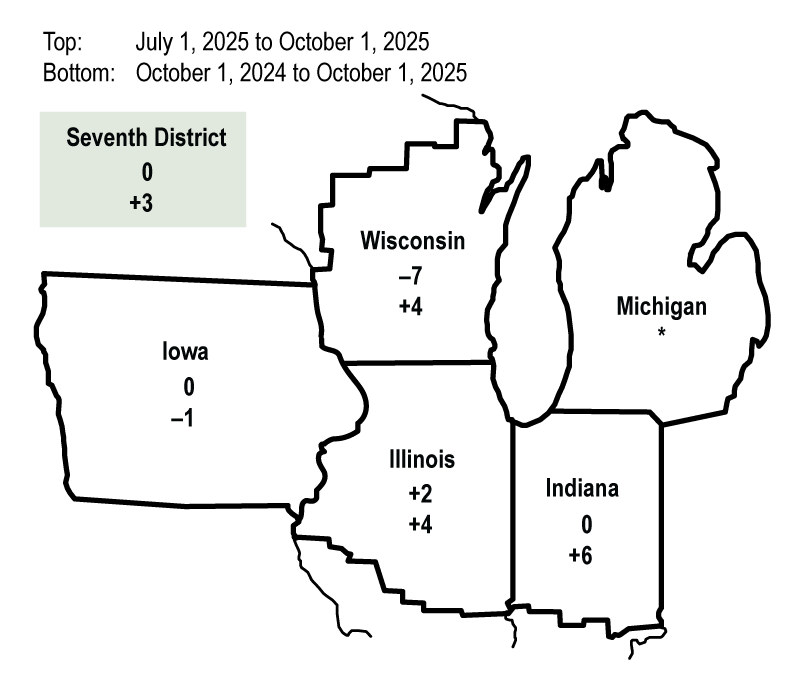
“According to the most recent AgLetter, Seventh District farmland values in the third quarter of 2025 were 3% higher than a year ago.” Read more on the land values for our Midwest reporting states Illinois, Indiana, Iowa, Michigan, and Wisconsin: Midwest Farmland Values Moved Up Modestly in the Third Quarter – Federal Reserve Bank of Chicago

Download their full report: Ag Letter No 2010 November 2025 Full Publication

Flat but Firm Farmland Values: What’s Driving Today’s Market

accountJennifer Moran | calendar-monthAugust 25, 2025

Compeer Financial shares farmland values “remain firm in 2025 – but multiple factors could shift the market in the months ahead” for our Midwest reporting states of Illinois, Wisconsin and Minnesota. Find a break down by state trends, key factors influencing farmland values, and explore current indicators for the remainder of 2025. Read their full article: Compeer Financial: Flat but firm farmland values 8-2025

Compeer Financial Flat but Firm Farmland Values 8-4-2025

Ag Land Values Mostly Stable Through First Half of 2025

accountJennifer Moran | calendar-monthJuly 25, 2025

This latest FarmDoc Daily Policy News Summary looks at ag land values through the first 6 months of 2025. Find the 6-Month Average Benchmark Land Values Change for our Midwest states of Wisconsin, Minnesota, North and South Dakota, Iowa, and Nebraska. Key contributors and findings include land value reports from Farmers National Company and Farm Credit Services of America. Read their full report here – Ag Land Values Mostly Stable Through First Half of 2025 – Farm Policy News