Minnesota Farmland Market Shows Steady Strength as 2026 Sales Add New Clarity

accountJennifer Moran | calendar-monthJuly 29, 2026

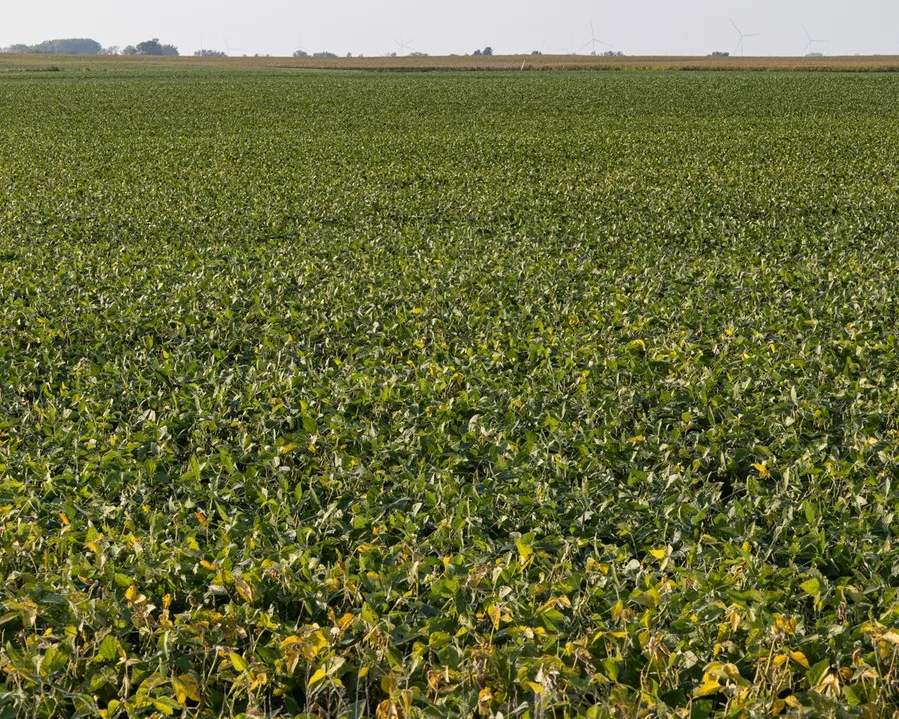
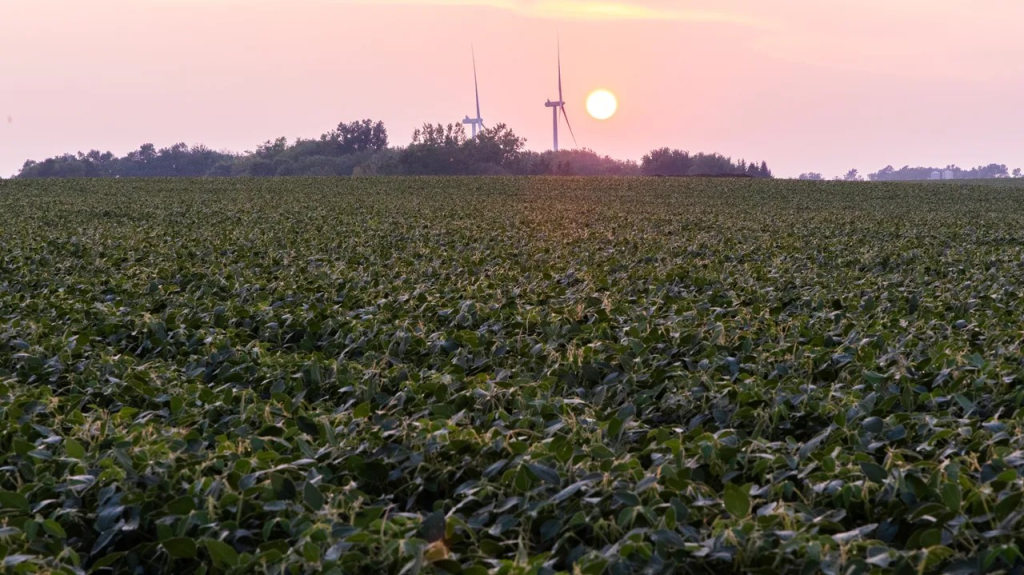
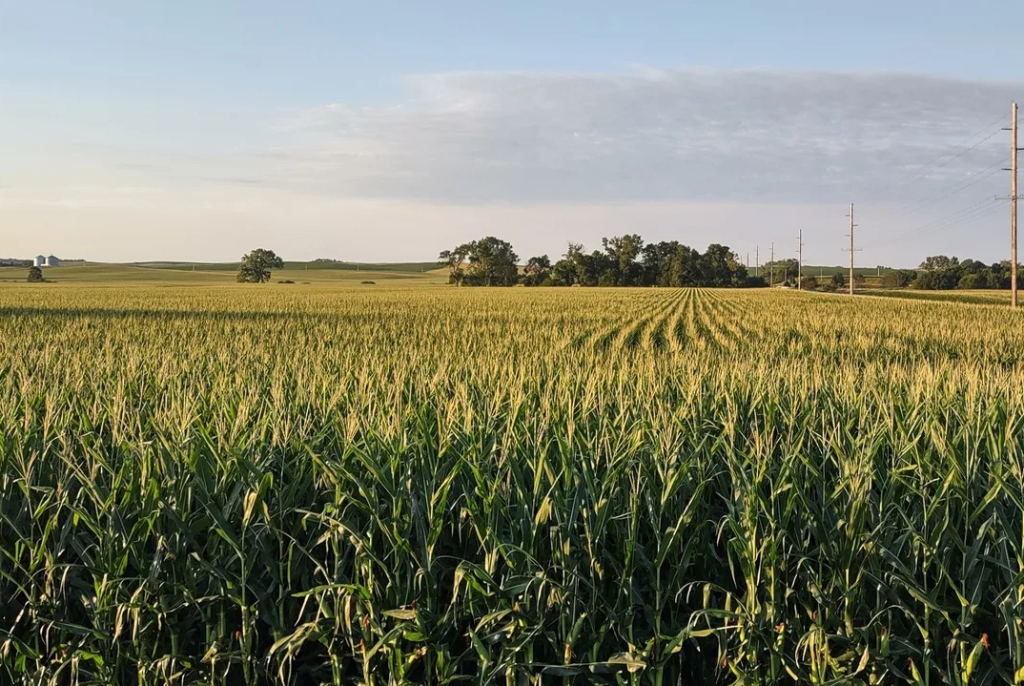
The latest Farm Progress report reinforces what Land Sales Bulletin continues to see across Minnesota: even after two years of breakeven agriculture, farmland values remain steady and supported by excellent crop ratings, timely rains, and long‑term buyer confidence. Timely rains are helping farmers “out‑bushel” lower commodity prices and maintain yield potential.

While commodity prices have softened, the Farm Progress analysis points to multiple factors keeping land values firm: low sale volume, neighborhood competitive dynamics, government support, legacy equity, new investment money, 1031 exchange activity, interest rates, and inflation hedging . As Farm Progress notes, short‑term market weakness has not overtaken long‑term thinking in farmland decisions.

Key Minnesota takeaways:

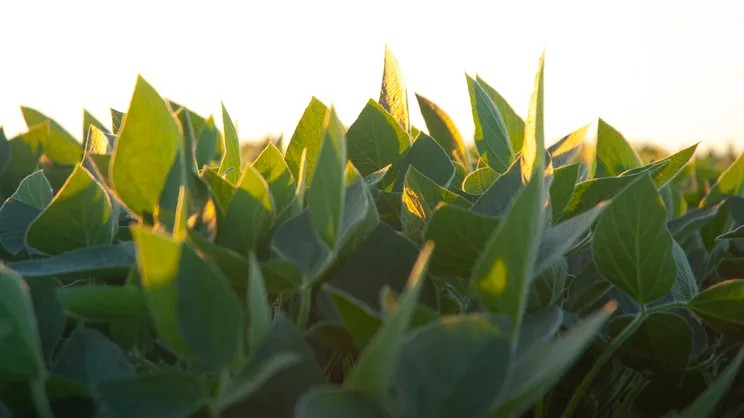
  • Strong crop outlook with USDA rating corn 67% excellent and soybeans 65% excellent
  • Timely rains strengthening yield potential
  • Seller‑friendly conditions for A‑quality land despite breakeven economics
  • Multiple market forces supporting values beyond commodity prices
  • Competitive sales across Minnesota counties:
    • Blue Earth County: ~90 acres at $12,389 per acre, CPI 81.7
    • Faribault County: ~40 acres at $12,000 per acre, CPI 91.9
    • Le Sueur County: ~144.38 acres at $12,851 per acre, CPI 90.2
    • Murray County: ~160 acres at $10,100 per acre, CPI 92.8
    • Nobles County: ~160 acres at $12,500 per acre, CPI 93.3
    • Polk County: ~80 acres at $10,000 per acre, CPI 91.1
    • Sibley County: ~120 acres at $11,000 per acre, CPI 91.8
    • Traverse County: ~141.21 acres at $8,500 per acre, CPI 93.7

As fall approaches, these finalized sales will provide additional data points that help define Minnesota’s market direction and reinforce the long‑term stability that continues to characterize the region. Read more from Farm Progress: Farmland market affected by much more than just commodity prices

Minnesota land sales - Farm Progress

Iowa Farmland Market Setting Up for a Late‑Season Sales Surge

accountJennifer Moran | calendar-monthJuly 27, 2026

As one of Land Sales Bulletin’s Midwest reporting states, Iowa is showing early signs of a more active land market heading into late summer and fall. Here are the report highlights:

  • Iowa, one of LSB’s Midwest reporting states, may see a “flush of land sales” between Aug. 1 and Sept. 30.
  • Heirs who inherited land in 2024–25 may test the early‑season market before late fall and winter.
  • Demand continues to outpace supply statewide, keeping conditions seller‑friendly in 2026.
  • June Iowa sales showed strong pricing and competitive CSR2 ratios across multiple counties.
  • A brief pause is expected during peak harvest before another strong run of sales late in the year.

Recent June sales across Iowa reinforce that seller‑friendly environment, with strong prices and competitive CSR2 ratios observed in multiple counties. Market momentum is expected to pause briefly during peak harvest before another strong run late in the year. Source: Farm Progress
Author: Doug Hensley, President of Hertz Real Estate Services
Article Link: https://www.farmprogress.com/markets-and-quotes/surge-of-iowa-farmland-sales-likely-later-this-year

Sunflower Acreage Climbs in 2026: Strong Gains in North & South Dakota Lead the Nation

accountJennifer Moran | calendar-monthJuly 23, 2026

U.S. sunflower acreage rose 5% this year to 1.35 million acres, according to USDA estimates, with the strongest growth coming from South Dakota and North Dakota. Oil‑type and non‑oil sunflower varieties both saw year‑over‑year increases, reflecting tight stocks, strong demand, and elevated prices heading into fall.

Among the eight major sunflower‑producing states, the Dakotas stand out. South Dakota posted the largest increase in planted oil‑type acres, up 56,000 acres from last year . North Dakota followed with a 30,000‑acre increase . Non‑oil sunflower acreage also expanded sharply, with South Dakota again leading all states with a 21,000‑acre jump .

For Land Sales Bulletin readers, this is a positive regional signal: both North Dakota and South Dakota—key LSB Midwest reporting states—are driving national growth in a crop tied to strong market fundamentals, tight stocks, and early‑harvest price premiums expected later this season .

  • South Dakota: Largest oil‑type acreage increase (+56,000 acres) and largest non‑oil increase (+21,000 acres).
  • North Dakota: Strong oil‑type acreage growth (+30,000 acres).
  • Market Context: Tight stocks and strong demand expected to keep prices firm into September.
  • National Trend: U.S. sunflower acreage up 5% year over year.

Read more from Farm Progress: U.S. sunflower acreage jumps 5% as tight stock pushes prices

Nebraska Farmland Sales Hold Steady Across Key Regions

accountJennifer Moran | calendar-monthJuly 6, 2026

Nebraska’s land market continues to show strength this summer, even with limited inventory. According to Farm Progress, high‑quality farms remain in demand, with more buyers than sellers across the state.

Representative sales from five counties highlight the range of values and land types moving this season.

  • Garden County (Panhandle): 159.59 acres sold for $1,785/acre, featuring superior soils and strong ag plus recreational potential
  • Merrick County (East): 78.08 acres sold for $9,925/acre, a well‑managed Platte Valley irrigated farm with excellent water access
  • Lancaster County (Southeast Lincoln area): 124.06 acres sold for $18,499/acre, driven by transitional development potential and strong location advantages
  • Hall County (Central): 76.54 acres sold for $11,039/acre, positioned near strong grain markets and an ethanol plant
  • Johnson County (Southeast): 160 acres sold for $10,500/acre, with 96% tillable acres and completed conservation work

Nebraska remains a core state in Land Sales Bulletin’s Midwest reporting region, and these sales reflect a market where quality land continues to attract strong buyer interest. Farm Progress: Farmland sales hold steady across Nebraska

Minnesota Farmland Snapshot: Recent Sales Across Key Counties

accountJennifer Moran | calendar-monthJuly 2, 2026

Minnesota’s farmland market continues to show resilience heading into the second half of 2026, supported by recent sales across several counties statewide. While values have softened slightly, the market remains stable, with widening gaps between excellent and moderate-quality tracts as buyer demand shifts.

3 Key Things to Watch in the Second Half of 2026

  • 2026 Crop Outlook — In‑season yield expectations will heavily influence farmer optimism and market aggressiveness
  • Geopolitics — War, trade, interest rates, and tariffs continue to shape commodity prices and input costs, with potential rate hikes and shifting global commitments on the horizon
  • Government Support — Additional assistance programs may help producers manage rising fuel and fertilizer costs and provide underlying support for land values

As a key Midwest reporting state for Land Sales Bulletin, Minnesota continues to demonstrate steady strength in the Midwest land market. Farm Progress:https://www.farmprogress.com/management/3-things-to-watch-as-farmland-market-readies-for-second-half-of-2026

Minnesota land sales - Farm Progress

Dairy Investment Surges Across Key Midwest States During National Dairy Month

accountJennifer Moran | calendar-monthJune 18, 2026

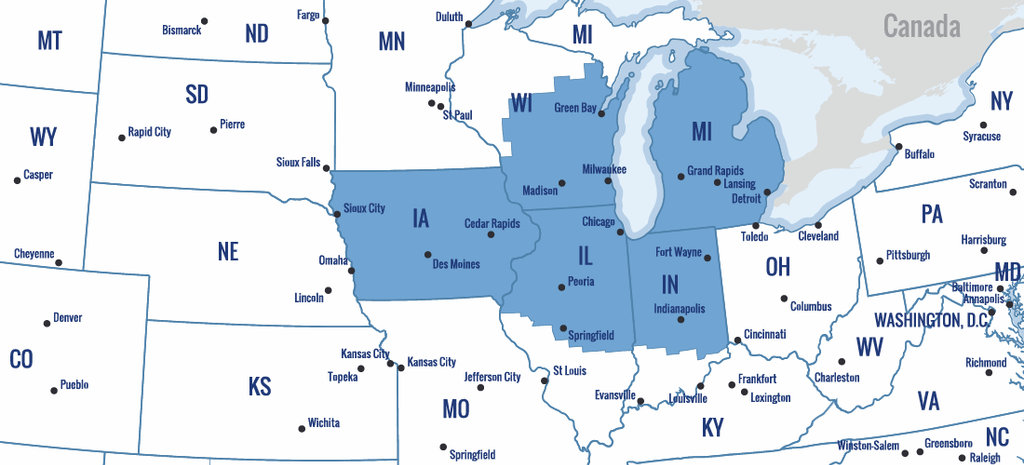
June’s National Dairy Month arrives at a moment when several of our Midwest states are seeing major momentum in dairy processing investment. As processors look beyond traditional strongholds, states with growing milk supplies — including Iowa, Minnesota, South Dakota, Wisconsin, and Michigan — are emerging as strategic hubs for future capacity.

The article highlights Iowa’s return to the nation’s top 10 dairy states, driven by herd growth along the I‑29 corridor spanning western Iowa, southwestern Minnesota, and eastern South Dakota. Wisconsin continues to draw significant investment, with more than $1.1 billion tied to its long‑standing leadership in cheese and whey production. Michigan also stands out, attracting $1.3 billion in new processing capacity as it leads the nation in milk per cow productivity.

As processors “follow the milk,” the Midwest’s expanding production base positions the region for continued growth — reinforcing the essential role our states play in the nation’s dairy landscape. Read more from Farm Progress – farm progress – the-new-dairy-gold-rush-which-states-see-investment-in-processing

Iowa Farmland Values Hold Steady as Key Market Factors Take Shape

accountJennifer Moran | calendar-monthJune 16, 2026

In a new analysis from Doug Hensley, President of Hertz Real Estate Services, Iowa enters the 2026 growing season on “stable legs” thanks to limited land supply and continued buyer demand. Hensley outlines three forces that will shape the direction of Iowa’s land market through the second half of the year: crop prospects, geopolitics, and interest rates.

Iowa farmers — who continue to purchase 70% to 75% of row‑crop farms offered to the market — remain closely tied to in‑season yield expectations, influencing how aggressive they are in bidding for land. Geopolitical variables, including China’s soybean demand and the economic ripple effects of the Iran conflict, add further uncertainty for commodity prices and farm‑level profitability. Meanwhile, interest rate direction remains a critical watchpoint as inflation pressures push borrowing costs higher.

Despite these moving parts, recent Iowa sales — from Sioux County’s $26,600/acre auction to strong CSR2‑adjusted prices across counties like Story, Cedar, and Marion — reinforce the market’s underlying stability. Farm Progress: Will stable Iowa land values continue? Watch these 3 factors

As one of Land Sales Bulletin’s Midwest reporting states, Iowa continues to demonstrate resilience, disciplined demand, and a market that rewards high‑quality farmland even in a complex economic environment.

Strong Buyer Interest Continues Across Midwest Land Markets

accountJennifer Moran | calendar-monthJune 5, 2026

Recent land sales across the Midwest show that buyer demand remains steady, even as overall listings stay limited. The latest report highlights representative sales from Kansas and Missouri, along with two strong transactions from Illinois, one of Land Sales Bulletin’s core Midwest reporting states.

In Kansas, cropland in Ottawa County sold for $2,450 per acre at online auction, supported by productive silt loam soils and consistent wheat yields . Missouri’s Reynolds County pastureland brought $2,500 per acre, reflecting strong forage production and well‑maintained fencing and water infrastructure.

Illinois posted two notable sales:
Knox County: 87.78 acres sold for $8,200 per acre, offering productive tillable ground and upland game habitat.
Tazewell County: 40.3 acres reached $19,900 per acre, supported by a strong 138.5 Productivity Index and high‑quality soils including Ipava and Sable.

These sales underscore the resilience of Midwest farmland markets, where buyer interest remains high and finalized transactions continue to reflect strong regional demand. Farm Progress: https://www.farmprogress.com/farm-business/buyers-still-lining-up-for-land-sales

Iowa Cash Rents Hold Steady in 2026 Despite Market Pressures

accountJennifer Moran | calendar-monthJune 3, 2026

Iowa’s 2026 cropland cash rents showed remarkable stability, landing at an average of $270 per acre, just $1 below 2025 levels. Despite lower commodity prices and elevated input costs, rental rates across high-, medium-, and low‑quality farmland saw only minor adjustments, mirroring the steadiness seen in recent land value surveys.

County‑level results reflected Iowa’s typical variability: 47 counties posted increases, 49 saw declines, and 3 remained unchanged. The highest average rents were reported in Sioux, Lyon, and Delaware counties, while Wayne, Lucas, and Davis recorded the lowest averages.

Looking ahead, improved season‑average price projections for corn and soybeans—supported by USDA’s May WASDE update—have contributed to a more optimistic outlook for 2026 crops. Futures markets are signaling some of the strongest price expectations in over a year, helping keep cash rents from moving sharply in either direction.

For landowners and operators across Iowa, these findings reinforce the value of using county‑level data as a starting point for 2027 lease discussions, while still tailoring agreements to productivity, drainage, fertility, and local market conditions. Farm Progress: https://www.farmprogress.com/farm-business/why-iowa-cropland-cash-rents-barely-budged-in-2026?

Michigan Farmland Spotlight: Innovation, Specialty Crops, and Global Reach

accountJennifer Moran | calendar-monthMay 28, 2026

Michigan and it’s farmland remains one of Land Sales Bulletin’s most dynamic Midwest reporting states — a region where long‑established family farms continue to evolve, diversify, and find new markets. A recent example comes from Tekonsha, where sixth‑generation farmer Ed Shumway transformed his family’s 170‑year‑old dairy farm into a thriving international popcorn operation, shipping premium kernels to 28 countries.

Shumway’s shift from dairy to specialty crops began in the early 1990s, when he pivoted to popcorn production after years of managing a traditional dairy herd. Today, he farms roughly 700 acres, rotating popcorn and soybeans for fertility and pest management benefits. His operation extends beyond his own acres, contracting with growers in Michigan and Ohio to bring total popcorn acreage to 2,000 acres annually.

Michigan’s specialty crop strength is on full display in stories like this. From precision harvest practices — where even a cracked hull can reduce popping quality — to investments in advanced drying and cleaning systems that ensure premium kernels reach global buyers, Michigan producers continue to demonstrate the innovation and adaptability that define the state’s agricultural landscape.

Shumway Popcorn’s international reach includes markets in Jordan, Lebanon, Chile, Germany, Mexico, and Indonesia, supported by Michigan’s strong export infrastructure and state‑level resources for agricultural trade. It’s a reminder that Michigan farmland doesn’t just feed local communities — it connects to global supply chains. Farm Progress: Michigan farmer pivot to popcorn goes global

Land Sales Bulletin tracks verified farmland sales across Michigan and the broader Midwest, providing transparent, comparable data that helps landowners, operators, and ag professionals understand the trends shaping regions like this one.