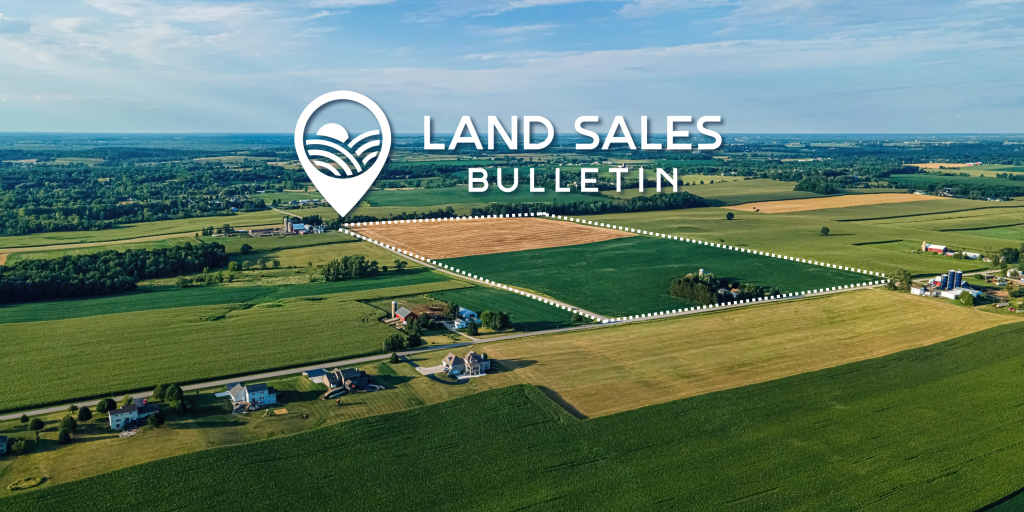
Our Midwest reporting state of Wisconsin farmland values in 2026 remain remarkably steady, even after several years of rapid appreciation. Peoples Company’s recent analysis shows the market has shifted into a phase that is stable, disciplined, and highly localized.
Despite expectations of a correction due to higher interest rates and tighter margins, values across much of the state have held firm. The key stabilizers: limited supply, strong owner equity, and continued demand for high‑quality parcels.
Inventory remains the defining force. Generational ownership patterns and strong financial positions have kept many high‑quality tillable acres off the open market, reducing transaction volume across Wisconsin’s agricultural counties. When productive, well‑located parcels do list, competition is intense — especially among local operators seeking strategic expansion opportunities.
Interest rates have influenced buyer behavior but have not weakened values. Well‑capitalized buyers remain active, relying less on leverage and focusing more on operational fit and long‑term efficiency.
Quality differentiation is widening. Soil productivity, access, drainage, field configuration, and proximity to existing operations are now major determinants of value potential, with top‑tier parcels commanding clear premiums. Read more: Wisconsin Farmland Values in 2026: What’s Driving the Market
For Wisconsin landowners, 2026 remains a historically favorable environment — but outcomes increasingly depend on location, accurate pricing, and hyper‑local market knowledge. As Land Sales Bulletin continues to report verified sales across the Midwest, Wisconsin stands out as a market driven by fundamentals rather than speculation.
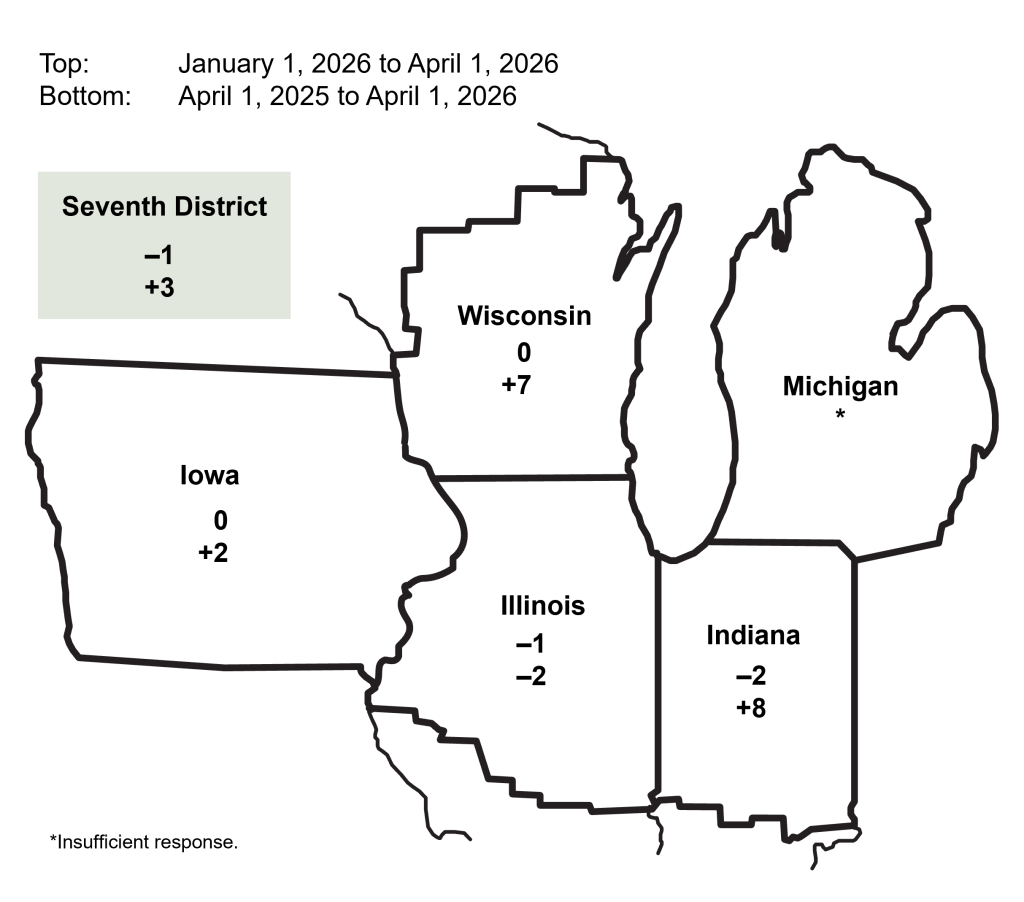
The Chicago Federal Reserve’s latest AgLetter shows that Midwest farmland values continue to demonstrate steady resilience heading into 2026. According to Seventh District data, agricultural land values were up 3% from a year earlier in the first quarter, even as “good” farmland saw a slight 1% dip from Q4 2025.
Surveyed lenders reported lower demand for farmland purchases compared with the same period last year, and the amount of farmland for sale also declined heading into early spring. Acreage sold followed the same trend, with fewer farms and fewer acres changing hands year over year.
Cash rents softened across much of the region, with the District seeing a 3% decrease in 2026—the second consecutive annual decline. State‑level shifts varied: rents were up 2% in Indiana, but down in Illinois, Iowa, and Wisconsin.
Credit conditions weakened as well. Lenders reported lower repayment rates, higher renewals and extensions, and continued strong demand for operating loans—now up for the tenth straight quarter. Nearly 17% of borrowers carried more debt into 2026 than the prior year. Read more: https://www.chicagofed.org/publications/agletter/2025-2029/may-2026
For Land Sales Bulletin’s Midwest reporting region—Illinois, Indiana, Iowa, Michigan, Minnesota, Nebraska, North Dakota, Ohio, South Dakota, and Wisconsin—these findings reinforce what our weekly finalized sales continue to show: a market adjusting to tighter credit and softer rent structures, yet still anchored by long‑term demand and the enduring strength of Midwest agriculture.
Inflation and money supply have always played an outsized role in shaping farmland markets — but their impact is especially visible across the Midwest. As the article notes, inflation erodes the purchasing power of cash, making productive assets like farmland more attractive to both farmers and investors.
Over the past decade, the U.S. money supply (M2) expanded dramatically, rising from roughly $13 trillion in 2016 to more than $22 trillion today. Much of this growth occurred during 2020–2022, when emergency fiscal spending and Federal Reserve liquidity programs injected unprecedented capital into the financial system. Read more from Farm Progress: How-does-inflation-impact-land-values
For our Midwest farmland, this matters for three reasons:
Inflation expectations drive demand for hard assets As more dollars circulate, the value of each dollar declines. The article highlights that this environment rewards asset owners and penalizes those holding cash. Farmland — with its scarcity, income potential, and long‑term stability — becomes a preferred inflation hedge.
Liquidity fuels buying power When credit is abundant, more buyers can compete for a limited supply of acres. This dynamic has supported strong appreciation across the Midwest, where local operators remain the dominant buyers.
Midwest land responds through interest rates, not speculation Unlike coastal real estate or equities, Midwest farmland values are most sensitive to interest rates, which are directly influenced by money supply trends. When M2 expands, rates tend to fall — supporting land purchases. When M2 slows, rates rise — moderating price growth.
Even as inflation cools and financial conditions tighten, the Midwest continues to show resilience. Scarcity, strong balance sheets, and productive yield help farmland hold value even when liquidity contracts.
In short: M2 sets the financial backdrop. Interest rates transmit the impact. Midwest farmland absorbs it in a steady, disciplined way.
Nebraska remains a core part of Land Sales Bulletin’s 10‑state Midwest reporting region, with recent sales activity underscoring a familiar theme across the state: strong buyer demand and limited supply. Farmland listings remain scarce, and that tight inventory continues to support values even as commodity margins shift. Landowners are cautious to sell, buyers remain active, and professionally marketed farms are moving quickly — a dynamic reflected in this month’s representative sales.
Recent Verified Sales Across Three Nebraska Counties
Saline County (Southeast) — 237.79 acres sold for $4,850/acre
219.08 tillable acres across two parcels
Mix of flat and gently rolling cropland
Working corral and pen facilities included
Lancaster County (East) — 75.16 acres sold for $8,800/acre
More than 96% tillable, with a four‑year lime program applied before 2024 planting
Geological and hydrological reports suggest irrigation potential in the northeast corner (no test drilling yet)
Pierce County (Northeast) — Two‑tract sale
Tract 1: 160 acres at $4,300/acre; 129.9 certified irrigated acres; includes 2012 Zimmatic pivot and irrigation equipment
Tract 2: 320 acres at $5,300/acre; 267.48 certified irrigated acres; includes two 2007 pivots, gearhead, and updated well components
These transactions highlight the diversity of Nebraska’s land base — from high‑quality tillable acres in the east to pivot‑irrigated tracts in the northeast — and reinforce the value of consistent, verified reporting across the Midwest. Read more from Farm Progress: Land in Demand but not much supply on the Market
Subscribers can explore full sale details, historical trends, and county‑level data through Land Sales Bulletin’s reports and digital tools.
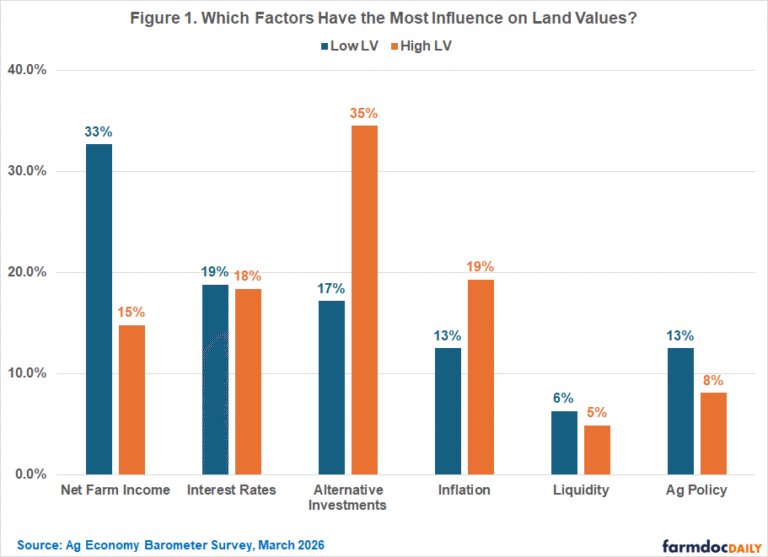
Producer sentiment continues to diverge sharply depending on how farmers view the direction of land values. The March 2026 Purdue University–CME Group Ag Economy Barometer shows that only 10% of producers expect land values to decline, while 35% expect them to rise over the next 12 months . Those expecting higher values also reported stronger current conditions and more optimism about future financial performance—with a Financial Performance Index of 111 compared to 93 among those expecting declines .
High input costs remain the top concern for both groups, though the pressure is felt more intensely among producers anticipating lower land values . And when asked what’s driving land values locally, the groups split: those expecting declines pointed to net farm income, while those expecting increases cited alternative investments as the biggest influence .
Why Land Sales Bulletin’s Midwest Data Is Essential
That’s where Land Sales Bulletin provides critical clarity. By documenting finalized, completed farmland sales across 10 Midwest states, LSB delivers the ground‑truth data needed to interpret sentiment shifts in real time. When producers express optimism or caution, LSB’s county‑level sales reports show whether actual transactions reflect those expectations—or diverge from them.
In a moment when producers are split on the direction of land values, LSB’s consistent sales data helps land professionals, lenders, appraisers, and producers distinguish perception from market reality. It’s the difference between watching the weather forecast and checking the rain gauge.
Nebraska remains a key state within Land Sales Bulletin’s 10‑state Midwest reporting region, and the latest preliminary data from the 2026 University of Nebraska Farm Real Estate Market Survey reflects a market adjusting to tighter margins and shifting sector strength.
Statewide farmland values dipped 1% to $3,905 per acre, marking the second consecutive year of decline as crop producers face narrower margins and softer receipts. In contrast, grazing and hay land values rose 4% to 7%, supported by strong cattle prices and historically low cow herd numbers.
Regional differences remain notable:
East District continues to lead at $9,315/acre (down 1%).
North Region saw the strongest gains, up 4%.
Southeast District posted the largest decline at –3%.
Cash rents followed similar patterns, with cropland rents slipping 1% to 9% depending on land type, while pasture rents strengthened.
As one of Land Sales Bulletin’s core Midwest reporting states, Nebraska’s evolving land values, rental trends, and sector‑specific pressures continue to shape the broader regional story. The final UNL report, expected in June, will add detail on land grades, transaction characteristics, and auction trends. Read more from Farm Progress: Average Nebraska farmland values drop for second straight year
A major North Dakota land auction—spanning 4,398 acres across four counties, brought in $21.82 million, landing nearly even with its two‑year‑old appraisal. The results highlight what we’re seeing across the region: buyers remain active, but they’re more selective than in past peak years. Some tracts soared above 120% of appraisal values, while others settled lower, reflecting a market that rewards high‑quality soils, strong access, and proven productivity.
As one of Land Sales Bulletin’s Midwest reporting states, North Dakota continues to demonstrate that while the market isn’t at the highs of 2022, it remains far from collapsing. Demand is steady, capital is active, and buyers are selective, reflecting a more mature, disciplined phase of the land cycle. Farm Progress:North Dakota auction shows a disciplined but still strong land market
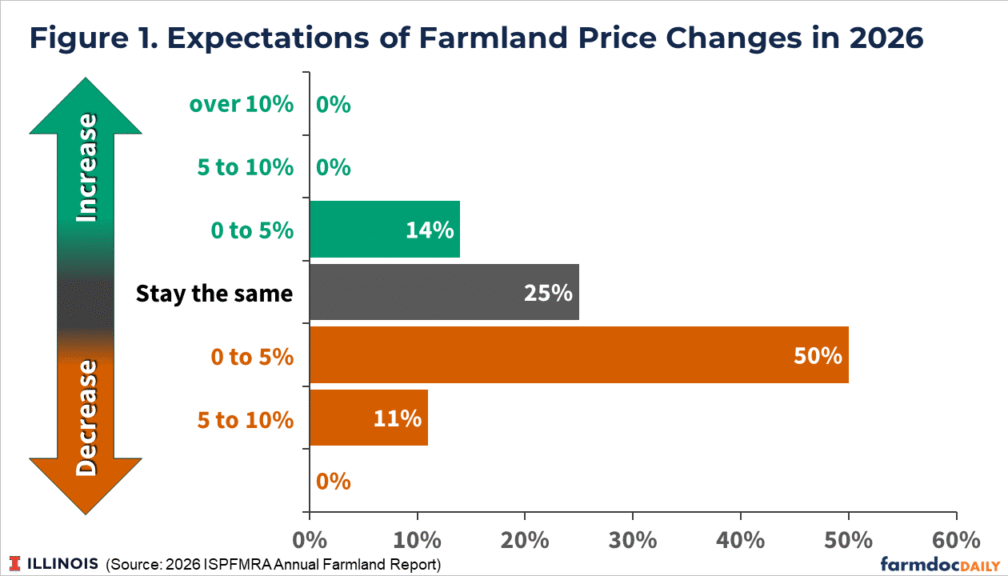
Illinois farmland values are entering a period of stabilization after several years of rapid appreciation. According to the latest ISPFMRA survey, most market participants expect modest softening in 2026, driven by tighter crop margins, elevated input costs, and a high‑interest‑rate environment. While 61% of respondents anticipate slight price declines, long‑term confidence remains strong, with 77% expecting higher values within five years. Transaction volumes are also cooling, and private treaty sales are regaining ground as buyers seek flexibility in a shifting market.
As one of Land Sales Bulletin’s reporting states, Illinois continues to demonstrate the importance of timely, accurate, and completed land sale data in understanding market sentiment and tracking regional trends across the Midwest.
Across the Midwest, farmland is more than acreage—it is heritage, livelihood, and the foundation of rural communities. Yet despite its importance, reliable information about what land actually sells for can be surprisingly difficult to find. That’s where Land Sales Bulletin plays a vital role.
For more than three decades, Land Sales Bulletin (LSB) has served as one of the Midwest’s most trusted sources for rural land sales. In a region where agriculture shapes local economies, family legacies, and community identity, LSB provides something essential: accurate, timely, recorded county‑level land sale data. Our data provides a clear, factual picture of the land market—free from speculation, rumor, or inflated auction chatter.
What Land Sales Bulletin Does
LSB focuses exclusively on recorded land sales of 20 acres or more, across 10 core Midwest states: Illinois, Iowa, Indiana, Michigan, Minnesota, Nebraska, North Dakota, Ohio, South Dakota, and Wisconsin, pulled directly from county courthouse records. This means:
No pending sales
No auction estimates
No unverifiable numbers
Just finalized, documented transactions that reflect real market activity.
Each sale includes county‑level detail—acres, price, land type, soil ratings, PINS, and buyer/seller information when available—giving farmers, landowners, brokers, lenders, appraisers, investors, and rural communities the transparency they need to make informed decisions.
Why This Matters to the Public
Even for residents who are not involved in agriculture, land sales influence daily life:
Local businesses depend on strong farm income.
Schools and infrastructure rely on stable property valuations.
Community planning requires understanding how land use is changing.
Economic development hinges on the health of rural land markets.
Accurate land‑sale reporting puts boots on the ground and helps ensure fairness, transparency, and informed decision‑making across the region.
The Human Story Behind Every Sale
Every land sale represents a turning point:
A retiring farmer passing land to the next generation
A young operator expanding to stay competitive
A family settling an estate
A community adjusting to new ownership
LSB’s role is to document these transitions with accuracy, timeliness and regard. By preserving the facts, LSB helps ensure that decisions—large and small—are grounded in facts.
Midwest Land Use: What the Data Shows
LSB’s 10 Midwest states remain among the most agriculturally productive in the nation. According to the 2022 USDA Census of Agriculture:
Iowa leads the region with nearly 30 million acres of farmland.
Nebraska, Illinois, Minnesota, and South Dakota each maintain more than 20 million acres.
North Dakota remains heavily agricultural, dominated by row crops and small grains.
Michigan and Ohio have smaller totals but maintain diverse production bases.
Wisconsin continues to balance dairy, forage, and specialty crops.
Across the region, one trend is clear: fewer farms, larger operations, and continued consolidation. Iowa was the only state in the group to gain farms between 2017 and 2022; all others saw declines.
When combined, LSB states contain roughly 260 million acres of farmland—representing nearly 30% of all U.S. farmland. That concentration underscores the Midwest’s role as the core of U.S. food, feed, and fuel production.
How Land Sales Bulletin Supports the Region
LSB’s subscriptions provide:
Completed, documented land sales of 20+ acres
State and county‑level detail on actual recorded sale transactions
Historical back data for market trend analysis
Reliable benchmarks for appraisals, lending, and estate planning
Consistent reporting across 10 states that anchor American agriculture
Because nearly one‑third of U.S. farmland lies within these states, LSB’s reporting helps shape national understanding of land values and market trends.
What Sets Us Apart
Our strength lies in our hands-on analysis of land sales data by local Midwest-trained land sales data specialists. This expertise ensures every documented land sale transaction is carefully reviewed and contextualized, providing unparalleled insight into the true market dynamics of the region. Our specialists bring knowledge and experience, making our data not just accurate, but actionable for farmers, landowners, realtors, lenders, investors, and appraisers alike.
Additionally, Land Sales Bulletin distinguishes itself through its commitment to transparency and consistency. We source data exclusively from official county courthouse records, ensuring that every sale reported is a complete, documented transaction. This rigorous approach eliminates speculation and provides stakeholders with trustworthy, timely information. Our ongoing dedication to quality makes us the Midwest’s most reliable land sales resource and choice for rural land sales data.
A Clearer Future for Midwest Land Markets
With rising farmland values, increasing investor participation, and ongoing consolidation, the need for transparent and documented land sale information has never been greater. Land Sales Bulletin is committed to delivering the clarity, consistency, and integrity Midwest rural real estate professionals rely on—supporting informed decisions and honoring the land and communities we serve.
Farmland values across the Upper Midwest continue to be defined by one theme: stability. Despite tighter margins and higher production costs, producers in our Midwest reporting states of Nebraska, Iowa, and South Dakota remain supported by strong balance sheets and historically limited land supply.
The article highlights meaningful differences across the region. Iowa is seeing lower auction volume and modest softening in returns. Nebraska remains steady, with high‑quality tracts still drawing strong interest. South Dakota stands out as the exception, posting increased sales activity and double‑digit gains in pastureland values over the past year.
Local buyers continue to dominate the market, and financing is becoming a more common strategic tool. With supply still constrained and fundamentals holding firm, the Midwest land market remains balanced and resilient — a story where stability itself is the headline. Farm Progress: Here’s the secret to steady farmland values