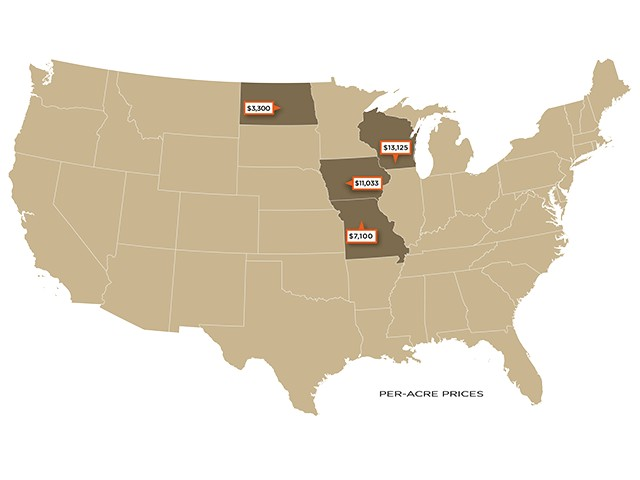
October’s farmland market delivered another round of finalized sales across Land Sales Bulletin’s Midwest reporting states of Iowa, North Dakota and Wisconsin, with neighboring Missouri also posting a notable result. DTN Progressive Farmer’s Landwatch update provides a clear snapshot of regional demand, soil productivity, and buyer interest.
Key Highlights
- Iowa — Dallas County recorded a 351-acre auction selling in three tracts for $3.7 million averaging $11,033 per acre The property includes a 158-acre parcel with a soil productivity rating of 83.3 and balanced corn and soybean base acres Additional tracts include a 112-acre parcel with strong corn and soybean yields and an 81-acre tract with a soil productivity index of 88.4
- Missouri (Neighboring) — Pettis County reported a 96-acre online auction selling for $678,476 averaging $7,100 per acre The farm is 86% tillable with a soil productivity index of 67.1 and includes wildlife habitat with deer and turkey hunting opportunities
- North Dakota — Kidder County saw a 160-acre online auction selling for $528,000 averaging $3,300 per acre The property is currently used for hay with a soil productivity index of 39.9 and supports habitat for waterfowl and upland birds in the prairie pothole region
- Wisconsin — Dane County recorded an 82-acre auction selling for $1.1 million averaging $13,125 per acre The farm includes 76 tillable acres with a soil productivity index of 77.8 and 6 acres enrolled in the Conservation Reserve Program until 2033
Read the full DTN Progressive Farmer article: Landwatch Weekly Recent Farmland Sales in Iowa, Missouri, North Dakota and Wisconsin