On February 13th – the USDA’s National Agricultural Statistics Service published their 2022 Census of Agriculture Report. The report points to the continuation of consolidation trends seen over the past few decades: farm numbers decreasing but farm sizes increasing. It’s visual graphs not only detail farm size statistics but also provide a Farmer Age Groups graph and findings. According to Secretary of Agriculture, Tom Vilsack, “This survey isn’t just about agriculture, it’s a map and a guide to a better and more open future.” This 5 minute read highlights some promising trends that are worth noting in our US ag industry. 2022 Census of Ag reports continued size and aging trends (farmprogress.com)
How interest rates could impact farmland values in 2024 – Prairie Farmer, a FarmProgress publication – February 12, 2024
A recent commentary from Prairie Farmer, outlines the variables that can come into play for farmland values, when it comes to the impact of interest rates and inflation. Although a recent Federal Reserve decision to hold interest rates steady has been said to be a beacon of stability, there are several outcomes that may weigh in differently on the impact it could have on farmland values. Click here to learn more – How interest rates could impact farmland values in 2024 (farmprogress.com)
From farmprogress.com, written by Alice in Dairyland’s Ashley Hagenow:
The diversity of Wisconsin’s agriculture industry is one of our greatest strengths. Let’s “dig up” some interesting information about Wisconsin-grown potatoes!
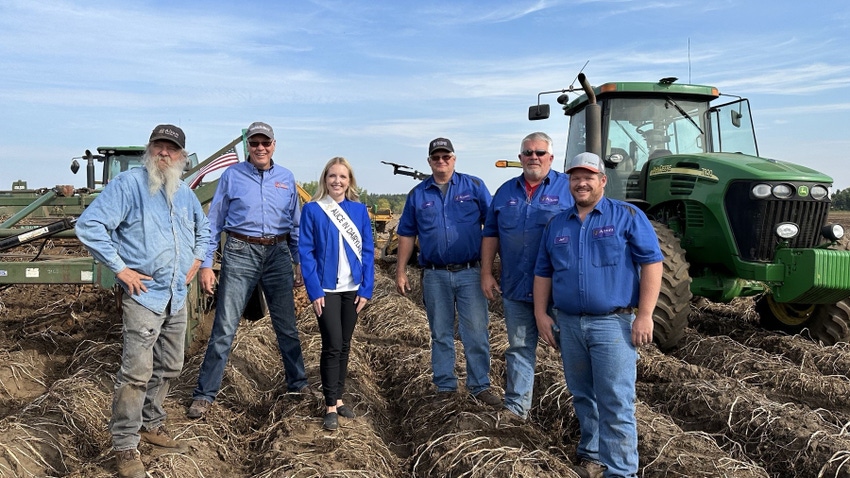
Last fall, I headed over to Alsum Farms and Produce in Adams, Wis., for a tour. Alsum states its story started “five decades ago in a 600-square-foot potato shed, with one man, Glenn Alsum, one vision, and a work ethic framed by dedication and service.”
Alsum Farms and Produce now has 600 times the original storage and production space, and 325 times the employees. The farm produces 200 million pounds of potatoes every year.
The beginning of our tour started at Alsum Farms’ Adams storage facilities, where we saw how potatoes are handled after they have been harvested from the fields and what it takes to store them – ensuring year-round availability of fresh, high-quality potatoes. Though Alsum stores potatoes by the thousands instead of in 5-pound bags, the same concepts apply to preserve storage quality.
According to the Wisconsin Potato and Vegetable Growers Association, you should always store potatoes in a cool, dark, well-ventilated place, but not too cold. You should never store them in your refrigerator, on your countertop, or in areas that get warm like next to the oven or under the sink. You should also keep your potatoes unwashed until you are ready to use them, as a wet potato will spoil quickly.
After the storage facilities, we headed over to “help out” with the harvest. Like a well-oiled machine, four tractors and a semitruck go through the field, harvesting in unison. As one semi fills with fresh potatoes, another one is close behind to take its place in line. Alsum’s fields are harvested each fall, and potatoes can be stored up until the following year’s harvest begins.
Wisconsin’s farmers grow six varieties of potatoes – russet, round white, round red, yellow flesh, blue and purple – providing consumers diverse choices for all their potato needs, even when shopping local. Wisconsin is the third-largest potato-producing state in the nation, behind Idaho and Washington.
The potential for lower farmland demand is largely driven by the fact that, “In 2023, interest costs on new farmland loans (blue line) surpassed the recent average annual appreciation in land values (green line) for the first time since 2001,” Kreitman wrote.
“From 2002 to 2022, growth in agricultural real estate values was well above the cost of financing, supporting demand for farmland,” Kreitman reported. “With interest costs now above average land value appreciation, farm operating profits will determine the magnitude of returns for financed land.”
However, farm operating profits could be low in the coming year, as farmdoc daily’s Nick Paulson and Gary Schnitkey reported last week in revised 2024 crop budgets, with “a reduction in the corn and soybean prices assumed for both 2023 and 2024 resulting in lower return and profitability projections” for farmers in Illinois.
“Current farmer return expectations are negative for both corn and soybeans across all regions for 2024 for cash rented land at average cash rent levels, suggesting cost adjustments will be needed in 2024 and beyond,” Paulson and Schnitkey wrote.
Farm bill update, new PLC reference prices in 2024 – FarmPress, a FarmProgress publication, January 26, 2024
While Congress still battles on the terms and passing of the Farm Bill, farmers received some good news and a little added help with the allowance increase of the 2024 reference prices, thanks to an escalator clause in the current farm bill.
The past year was one of transition and new beginnings for the Research and Demonstration Farms operated by Iowa State University.
At the leadership level, Kendall Lamkey was named director of research farms and associate dean for facilities and operations for the College of Agriculture and Life Sciences in May. Lamkey’s appointment follows the retirement of director Mark Honeyman in 2022.
Lamkey previously served as chair of the ISU Department of Agronomy. He says he looks forward to showcasing the farms and the work being done by ISU specialists.
“The research farms are a huge asset for the university and the College of Agriculture and Life Sciences,” he says. “They’re an avenue for our faculty to execute their research, teaching and Extension programs, and also an avenue for our demonstration projects in Extension.”
Senate Agriculture Committee Chair Debbie Stabenow, D- Mich., sent a memo to committee colleagues Wednesday spelling out five key principles she says will modernize the farm bill safety net. Those principles include targeting programs to active farmers, giving farmers more choice and flexibility, providing assistance in a timely manner, expanding the reach of programs to help more farmers and addressing the risks that emerging farmers face.
Stabenow says crop insurance is a key tool to meaningfully advance each of those goals.
“Whether I’m talking to farmers at a hearing, field day, or local diner, they all emphasize the importance of crop insurance,” she says. “Over time, we have made meaningful improvements, provided more choices for existing coverage, and expanded its reach to cover more crops, varieties, areas, and types of production.”
According to the Senator, crop insurance is working. She notes that while other programs take years to assist farmers after a disaster, crop insurance has provided nearly $30 billion in “timely support” in 2022 and 2023 so far.
Among other proposals, Stabenow wants provide all commodity groups the option of choosing between traditional base programs and a subsidized, streamlined area-based crop insurance policy. The 2018 Farm Bill gave this option to cotton producers.
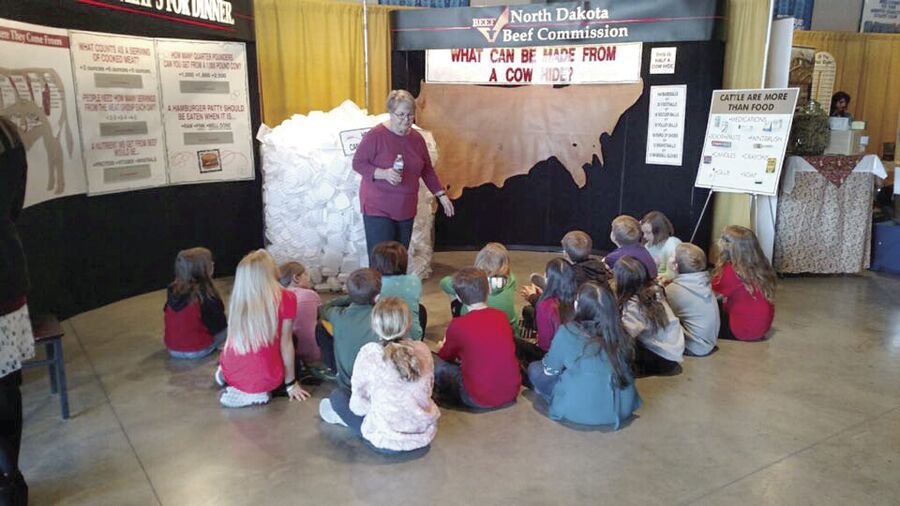
One of the most anticipated and attended features of the KMOT Ag Expo, the Living Ag Classroom, is back for another year of educating area students about production agriculture.
Designed at its roots as a teaching tool for elementary age students without a family background in agriculture, the program attracts fourth grade students from around the region to learn about all the processes involved with production agriculture.
“The Living Ag Classroom is kind of a staple of the KMOT Ag Expo,” said Todd Telin, KMOT Ag Expo manager. “We have 10 different commodity groups here to show the kids all about the agriculture process, like how honey is made and how wheat is turned into bread. It’s really great for the kids.”
Typically, approximately 600-700 students are bused in to participate in the Living Ag Classroom during the KMOT Ag Expo. The students travel in from around a 50-60 mile radius.
Participating students rotate through an assortment of hands-on activities in an effort to help teach them all about North Dakota agriculture and the process that puts food on their plates.
Each activity is sponsored annually by various commodity groups who set up the different activity sections and provide an approximate 15-minute presentation to help teach these students about production agriculture.
Many people feel that the USDA Farm Service Agency and Natural Resources Conservation Service have nothing to do with them. But they have everything to do with assisting local farmers in keeping their farms sustainable for future generations.
“FSA and NRCS work with our local farmers to increase the health and productivity of the soil on their ground by developing conservation plans and implementing these plans,” says Kayleen Hart, FSA program technician for Steuben County, Ind. “Along with our local partner, the Steuben Soil and Water Conservation District, we are able to offer technical and financial assistance to help farmers implement best management practices for their farm.”
Why is this important to everyone? “With the global population increasing, available farm ground continuing to decrease due to development or misuse, and erratic weather patterns due to climate changes affecting crop production, keeping the farm ground we have is important – not only to the farming community, but to everyone who loves to eat,” Hart says.
Ryan Waite and his family, who farm in Steuben County, have applied sustainable farming techniques for about 10 years. “In the last few years, we’ve completely converted all our acres to 100% cover crops and 100% no-till,” Waite says.
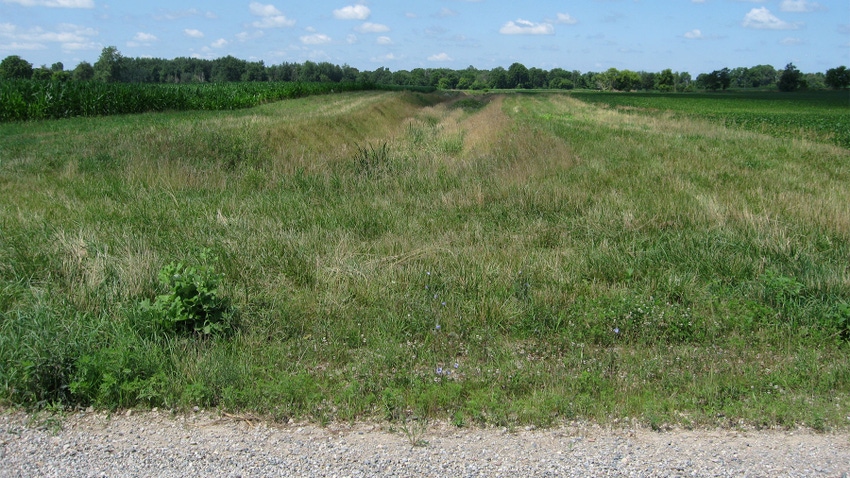
They also use filter strips where needed and are finding new ways each year to enhance their sustainability.
“My advice to the next generation is to keep evolving, keep researching, don’t be afraid to try something,” Waite says. “Everything is always changing.”
These changes have helped the Waite farm manage water quality and retain moisture within the soil where it would typically run off or evaporate.




 Senate Agriculture Committee Chair Debbie Stabenow, D- Mich., sent a memo to committee colleagues Wednesday spelling out five