USDA Pumps $28M into Future Farming – Boosting New Farmers and Ranchers

accountMktgLSB | calendar-monthNovember 17, 2023

From Minnesota Ag Connection:

The U.S. Department of Agriculture Deputy Secretary Xochitl Torres Small today announced an investment of $27.9 million across 45 organizations that teach and train beginning farmers and ranchers, including programs for U.S. veterans who are entering into agricultural careers and starting new farming businesses.

“The next generation of farmers and ranchers hold the promise for future American agriculture and rural prosperity,” said USDA Deputy Secretary Xochitl Torres Small. “Under the Biden-Harris Administration, USDA is providing our newest producers with the support they need to succeed and the educational resources to guide their operations on the path toward long-term sustainability and profitability.”

This investment is part of the National Institute of Food and Agriculture’s (NIFA) Beginning Farmer and Rancher Development Program (BFRDP), which supports a wide range of professional development activities and topics, such as managing capital, acquiring and managing land, and learning effective business and farming practices.

“This investment reflects USDA’s commitment to helping new farmers and ranchers realize their dreams,” said USDA Chief Scientist and Under Secretary for Research, Education an Economics Dr. Chavonda Jacobs-Young. “As the average age of our U.S. producers continues to increase, USDA is accelerating efforts to provide meaningful support to a rising cadre of farmers and ranchers-including military veterans interested in starting new careers after their service-so they can cultivate the skills needed to be productive, profitable and resilient.”

According to USDA National Agricultural Statistics Service’s Ag Census data, one-third of the United States’ 3.4 million farmers are over the age of 65.
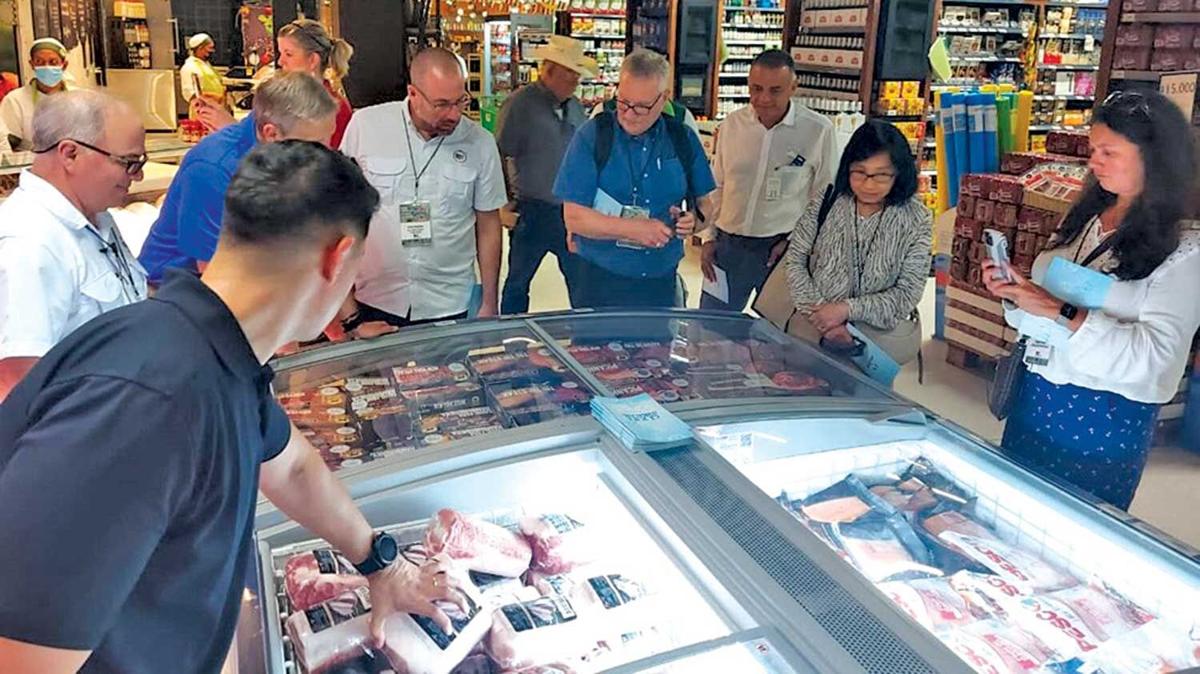
U.S. farmers make connections through world trade missions

accountMktgLSB | calendar-monthNovember 16, 2023

From Illinois Farmer Today:

U.S. producers tour a retail outlet in Cartagena, Colombia, during the U.S. Meat Export Federationââ ¬â„¢s Latin American Product Showcase in July. Photo courtesy Mark Read

Midwest farmers are popping up in Panama, Egypt, Colombia and South Korea more often these days. 

Grain and livestock farmers frequently travel with national organizations and state commodity groups to explore export opportunities and to tout the value of U.S. commodities.

Mark Read, a central Illinois corn and soybean farmer, says his time has been well spent on trade missions representing the U.S. Soybean Export Council and Illinois Soybean Association.

“We need exports other than to China,” he said.

Since 60% of Illinois soybeans are exported, if something goes wrong with the main trading partner, there need to be other strong markets for soybeans, he said.

Read was in Egypt this year when the Soy Excellence Center celebrated its 100th workforce training session there. In this case, the training helped Fish World workers cut costs in feeding tilapia by 25%. And at the University of Cairo, students celebrated getting their SEC certificates in poultry production.

Congressional ag leaders agree to farm bill extension

accountMktgLSB | calendar-monthNovember 14, 2023

From farmprogress.com:


The long-anticipated farm bill extension may be in sight. On Saturday, House Speaker Mike Johnson, R-La., introduced a continuing budget resolution to avoid a Nov. 17 government shutdown. The legislation includes a provision to extend the 2018 Farm Bill for one year.

Shortly after the legislation was announced, Senate Agriculture Committee Leaders Debbie Stabenow, D- Mich., and John Boozman, R- Ark., issued a joint statement with House Ag Committee Leaders Glenn “GT” Thompson, R- Pa., and David Scott, D- Ga., praising the decision.

“As negotiations on funding the government progress, we were able to come together to avoid a lapse in funding for critical agricultural programs and provide certainty to producers,”  the Nov. 12 joint statement says. “This extension is in no way a substitute for passing a 5-year farm bill and we remain committed to working together to get it done next year.”

Comparing rents for 2024 profitability

accountMktgLSB | calendar-monthNovember 7, 2023

From agupdate.com:

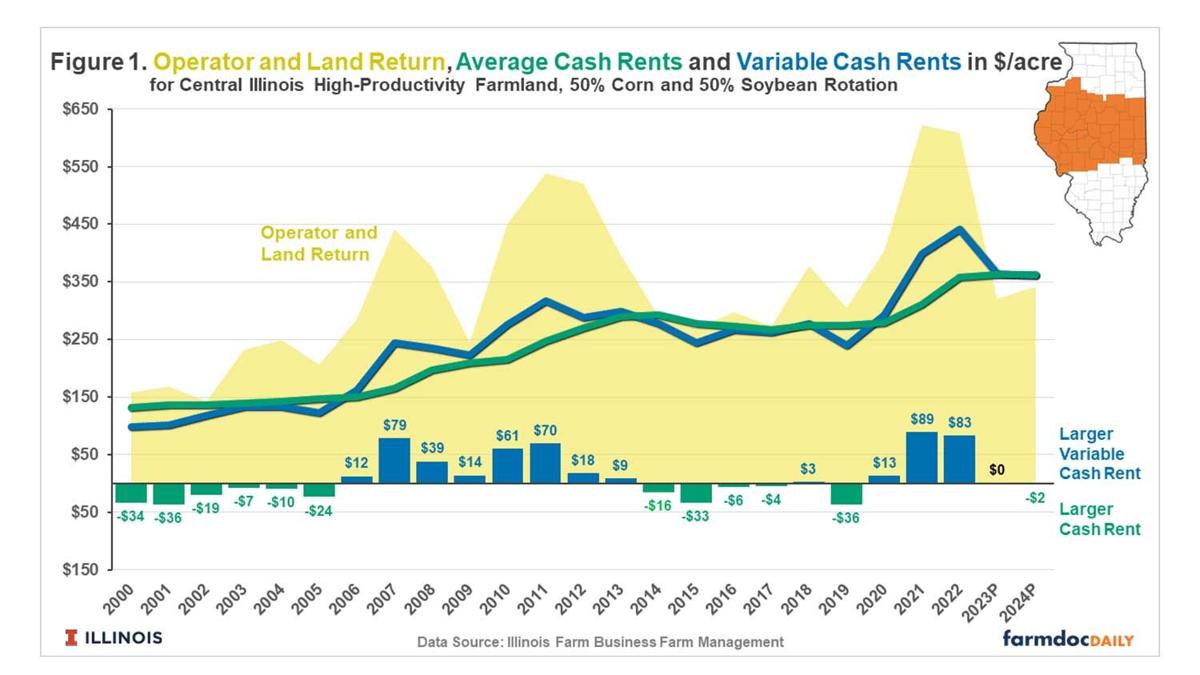
Recent crop budget and return projections for the 2023 and 2024 crop years show the potential for much lower, and potentially negative, returns to corn and soybeans across Illinois.

Lower corn and soybean prices in 2023 and 2024 lead to lower returns than in 2020 to 2022, despite some declines in fertilizer costs. Production costs remain high, such that break-even prices are near $5 per bushel for corn and $12 per bushel for soybeans for 2024, assuming trend yields.

Reducing land costs, specifically rental rates, often is needed during periods of lower returns. Fixed cash rent leases, where the farmer pays the landowner a fixed rental rate, can be difficult to re-negotiate to lower levels. Traditional share rent leases provide natural risk sharing between the farmer tenant and landlord but require more intensive management by the landlord and more coordination between both parties.

The variable cash lease has been suggested as a sort of middle-ground approach that provides risk-sharing benefits while also minimizing the management requirements for the landlord.

            Graphic courtesy University of Illinois farmdoc daily

Today’s article provides a historical comparison of the fixed cash, variable cash and share lease designs.

The variable cash lease adjusts to fluctuating revenue levels, however, the traditional share lease is more highly correlated with returns since it incorporates both revenues and direct costs in rental determination.

Projections for the 2023 and 2024 crop years are for negative farmer returns under both fixed and variable cash leases, but modest positive farmer returns under a traditional 50/50 share agreement.

Illinois farmland catches its breath

accountMktgLSB | calendar-monthOctober 30, 2023

From farmprogress.com:

After two years of 40% and 50% gains in farmland values, the Illinois land market has stabilized in 2023.

That’s according to the Midyear Snapshot Land Values Survey conducted by the Illinois Society of Professional Farm Managers and Rural Appraisers, in conjunction with Gary Schnitkey, University of Illinois ag economist.

“The market appears to be catching its breath,” says Luke Worrell of Worrell Land Services, Jacksonville, Ill., and chair of the ISPFMRA report.

In the first half of 2023, Class A and Class B farmland values have held steady, with little to no change in the “cream of the crop” land. Subsequently, there’s only been a 1% to 2% decline in marginal Class C and Class D land.

“From a values perspective, not much has changed since the calendar rolled into 2023,” Worrell adds.

Of those responding to the survey, 44% expect prices to remain the same for the rest of the year, while 36% expect prices to drop 1% to 3%.

Investing in the future of ag through the Madison County Livestock Boosters

accountMktgLSB | calendar-monthOctober 24, 2023

Celebrating our Midwest State of Nebraska.  We are proud to share their efforts towards investing in the future of our youth and agriculture.

From agupdate.com:

Raising livestock of any kind requires making a substantial financial investment.


Those families who want to show animals through 4-H or FFA at their county fair know the extra expense to purchase and feed an animal, not to mention the equipment and time invested to train and prepare the animal for the show ring.

With the extra financial commitment for families, it’s no wonder that participation in the 4-H and FFA livestock projects continues to dwindle.

The Madison County Livestock Boosters has designed a unique way to lessen the financial burden of showing animals. Youth in 4-H and FFA who exhibit a large or small animal at the Madison County Fair and Rodeo receive a bonus premium, thanks to the fundraising efforts of caring adults and the unwavering support of local businesses and individuals.

Bonus premiums are given for class placings and participation in showmanship, which is a direct reflection of the time and effort an exhibitor has put in before the show.

“Less kids are in production agriculture. Our main purpose is to increase participation in showing animals at the Madison County Fair,” said Troy Patzel, one of the original founders of the Madison County Livestock Boosters program.

Patzel has seen first-hand the decline in livestock numbers at the county and state fair level. He himself showed sheep, hogs and broiler chickens as a member of the Cookies & Critters 4-H Club and Newman Grove FFA at the Madison County Fair in the mid-1980s through the 1990s.

Why pay $34,800 an acre for farmland?

accountMktgLSB | calendar-monthOctober 20, 2023

From farmprogess.com:

In a remarkable turn of events, Missouri set a new benchmark in the farmland market this fall. A seemingly unremarkable 115 acres in Saline County, Mo., recently sold for an astonishing $34,800 per acre in late September, shattering the previous record held by Iowa at $30,000 per acre. This rapid sale, which concluded in a mere 15 minutes, was the result of a fierce bidding war between two farmers. The victor, Jeff Baxter from Carroll County, Mo., isn’t an investor but a neighboring farmer.

In August, an auction of 60 acres of Adams County, Ill., farmland brought $30,000 per acre with little fanfare.

The difference with that sale is that it was considered development ground. High prices on development ground are expected and not really newsworthy. What makes the Missouri sale stand out is that the reason for the demand for that piece of ground is not so obvious.


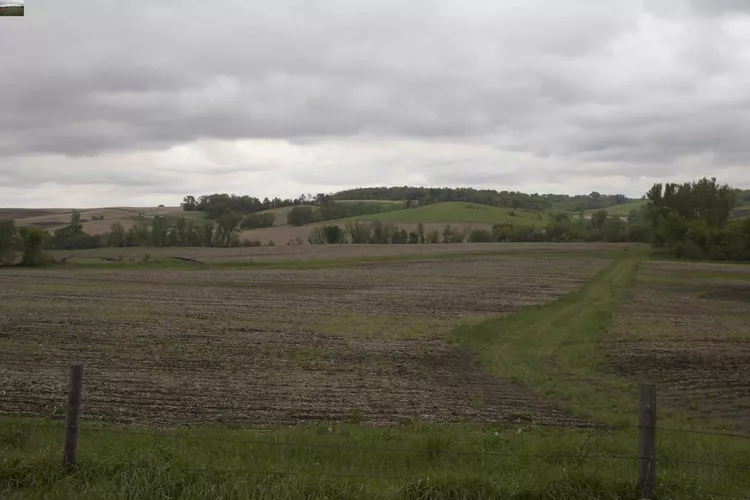
                         Photo by Holly Spangler


My farm management colleagues who were closer to the event don’t have much insight either. Some say it could have been 1031 exchange money; others think that perhaps ground nearer to the buyer was not as readily available. Only the buyer knows, for sure. From my perspective, it seems like a lot of money for dirt you gotta drive to.

What other reasons would drive someone to pay that much money for farmland? Here are five motivations that farm managers know can impact sales and push prices higher.

Some signs of softening farmland values

accountMktgLSB | calendar-monthOctober 18, 2023

In the October 5, 2023 article from Successful Farming senior economist, Cortney Cowley of the Kansas City Federal Reserve, explains that “farm profit margins were expected to be thinner this year because of lower commodity prices and higher expenses.” According to recent surveys, there are some signs of softening in values, despite farmland values being higher than expected given the current interest rates environment. “A steady supply of land sales and strong demand from farmers has likely supported broad resiliency of real estate values.”

FCA approves final rule on the Farm Credit System’s service to young, beginning, and small farmers

accountMktgLSB | calendar-monthOctober 13, 2023

From fca.gov:

By unanimous vote, the Farm Credit Administration board approved a final rule governing the Farm Credit System’s service to young, beginning, and small (YBS) farmers and ranchers. The final rule, which becomes effective Feb. 1, 2024, revises YBS regulations at 12 C.F.R. part 614.

The rule has several objectives:

  •  To expand the YBS activities of direct-lender associations to a diverse population of borrowers.
  •  To reinforce the supervisory responsibilities of the banks that fund the direct-lender associations, and require the banks to annually review and approve the associations’ YBS programs.
  • To require each direct-lender association to enhance the strategic plan for its YBS program.

“Today’s approval of a final YBS rule is the culmination of many years of hard work by FCA leadership, staff, and System institutions,” said Board Chairman and CEO Vincent Logan.

“I’m especially pleased to see the emphasis this rule places on outreach to and engagement with all populations of YBS farmers and ranchers. The System was created to serve as a safe, sound, and dependable source of credit for all creditworthy and eligible persons in agriculture and rural America,” said the chairman. “This rule will help the System better achieve that important mission.”

High school student donates 7,000 lbs. of produce from own garden

accountMktgLSB | calendar-monthOctober 12, 2023


From nbc15.com:

WHEATLAND, Iowa (KWQC/Gray News) – A high school student in Iowa donated 7,000 pounds of produce from her own garden to various nonprofit organizations in the area.

In less than two years, she has donated about $15,000 worth of produce.

Junior Lauren Schroeder began her journey at a food drive during the COVID-19 pandemic when she noticed there wasn’t enough produce being given to community members.

In her sophomore year, Lauren’s family gave her a half-acre of land to start her own garden.

She was awarded a grant from the Future Farmers of America and was able to expand her garden to a full acre with a fence to protect crops from pests.

The garden includes over 20 types of produce including tomatoes, potatoes, peppers, squash, cauliflower, zucchini, broccoli, herbs and others.

“I want to impact community members,” Lauren said. “Many people help you out, but it makes more difference when you help other people out. That’s what makes me most happy.”

Lauren has spent over 1,000 hours working in the garden with help from her siblings and parents.

Her goal is to donate a total of 20,000 pounds of produce by the time she graduates high school in 2025.

Lauren plans to expand the garden and add organizations to her donation list through her first year of college.

Copyright 2023 KWQC via Gray Media Group, Inc. All rights reserved.